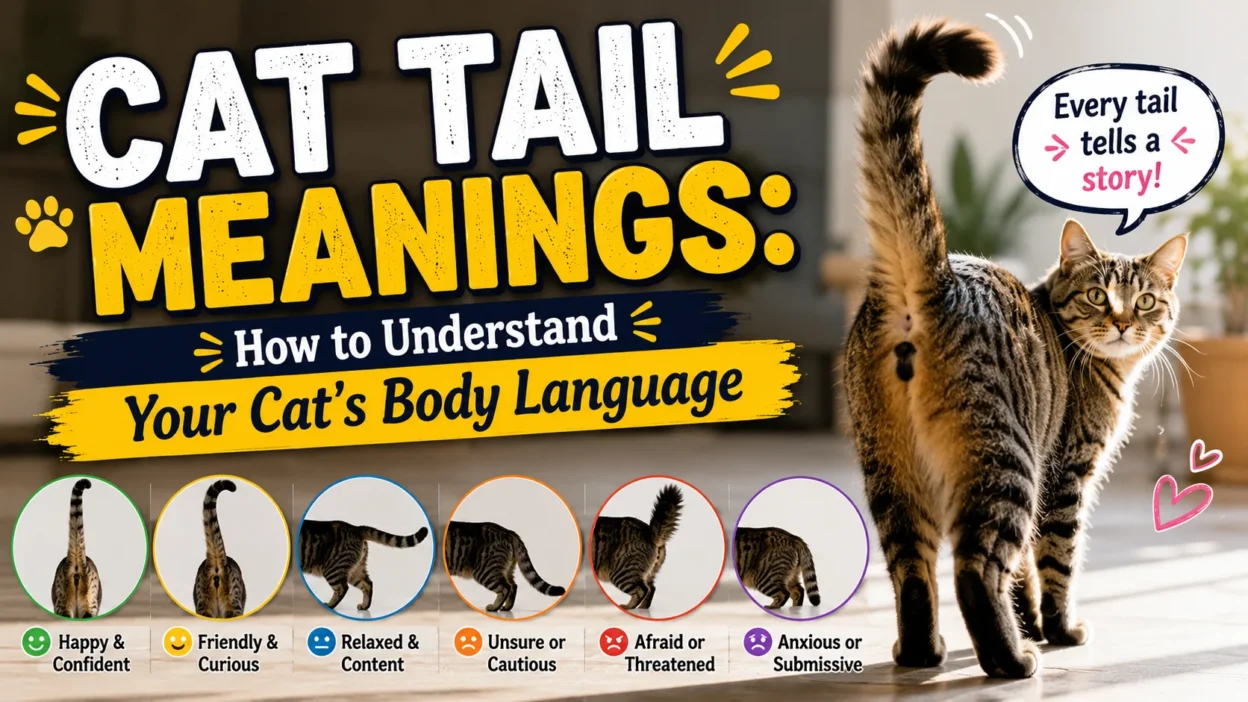
Cats may not speak with words, but they are excellent communicators. One of the most expressive parts of a cat’s body is its tail. From a high, upright tail to a puffed-up tail or a slow swish, every movement can reveal valuable clues about your cat’s mood, emotions, and intentions. Understanding cat tail meanings can help you build a stronger bond with your feline companion and respond appropriately to their needs.
Cats use their tails as a form of body language to communicate with humans, other cats, and even other animals. A tail position can indicate happiness, curiosity, fear, aggression, affection, or uncertainty. While vocalizations such as meowing and purring are important, a cat’s tail often provides an even clearer picture of how they are feeling at a given moment.
Whether you’re a new cat owner or a longtime feline enthusiast, learning how to interpret tail movements can improve your understanding of cat behavior. This guide explains common cat tail positions, what they mean, and how to recognize the emotional messages your cat is sending through its tail.
Quick Answer
Cat tail meanings vary based on position and movement. A tail held high usually signals confidence and happiness, a puffed-up tail indicates fear or defensiveness, a tucked tail often suggests anxiety, while a gently curved tail may show friendliness and relaxation. Observing the entire body language helps provide the most accurate interpretation.
Meaning Overview Table
| Tail Position | Meaning | Emotional State |
|---|---|---|
| Tail Straight Up | Confidence and happiness | Friendly |
| Curved Question Mark Tail | Curiosity and playfulness | Relaxed |
| Puffed-Up Tail | Fear or defense | Alarmed |
| Tucked Tail | Anxiety or submission | Nervous |
| Slowly Swishing Tail | Focus and concentration | Alert |
| Rapidly Thrashing Tail | Frustration or irritation | Annoyed |
| Wrapped Around You | Affection and trust | Loving |
| Low Tail Position | Uncertainty | Cautious |
| Tail Wrapped Around Body | Comfort or protection | Relaxed |
| Tail Quivering | Excitement and affection | Happy |
Why Cat Tails Are Important
A cat’s tail serves several purposes.
Balance
Cats use their tails to maintain balance while walking, climbing, and jumping.
Communication
Tail movements communicate emotions and intentions.
Social Interaction
Cats use tail positions to interact with humans and other animals.
Because tail language is so important, learning to read it can help prevent misunderstandings and strengthen your relationship with your pet.
Tail Straight Up Meaning
Meaning
- Confidence
- Happiness
- Trust
- Friendliness
A tail held high is one of the most positive cat tail signals.
What It Looks Like
The tail stands upright while the cat walks toward you.
What It Means
Your cat feels comfortable, safe, and happy.
Common Situations
- Greeting owners
- Exploring familiar environments
- Meeting trusted people
This is often considered the feline equivalent of a friendly hello.
Question Mark Tail Meaning
Meaning
- Curiosity
- Playfulness
- Relaxation
What It Looks Like
The tail is upright with a slight curve at the tip.
What It Means
Your cat is feeling social and open to interaction.
Best Response
Engage with your cat through play or gentle affection.
Tail Wrapped Around You Meaning
Meaning
- Love
- Affection
- Bonding
Cats sometimes wrap their tails around a person’s leg or arm.
What It Means
This behavior is similar to a human hug.
Why Cats Do It
They are showing trust and affection toward someone they feel connected to.
Tail Quivering Meaning
Meaning
- Excitement
- Happiness
- Anticipation
What It Looks Like
The tail stands upright and vibrates slightly.
Common Situations
- Greeting favorite people
- Anticipating food
- Receiving affection
Tail quivering is often a sign that your cat is thrilled to see you.
Slow Tail Swishing Meaning
Meaning
- Focus
- Concentration
- Interest
What It Looks Like
The tail moves slowly from side to side.
Common Situations
- Watching birds
- Hunting toys
- Observing movement
A slowly swishing tail often indicates that your cat is focused on something.
Rapid Tail Thrashing Meaning
Meaning
- Irritation
- Frustration
- Agitation
What It Looks Like
The tail moves quickly and forcefully.
What It Means
Your cat may be annoyed or overstimulated.
Warning Sign
If you continue petting a cat whose tail is thrashing, you may receive a scratch or bite.
Puffed-Up Tail Meaning
Meaning
- Fear
- Defense
- Startle response
What It Looks Like
The tail becomes larger and bushier.
Why It Happens
Cats puff up their tails to appear larger and more intimidating.
Common Triggers
- Loud noises
- Unexpected encounters
- Threatening situations
This is a defensive reaction designed to discourage potential threats.
Tucked Tail Meaning
Meaning
- Fear
- Anxiety
- Submission
What It Looks Like
The tail is tucked close to the body or beneath it.
What It Means
Your cat feels uncomfortable or insecure.
Common Situations
- Veterinary visits
- New environments
- Stressful experiences
A tucked tail often indicates that a cat needs reassurance and space.
Low Tail Position Meaning
Meaning
- Caution
- Uncertainty
- Observation
What It Looks Like
The tail hangs lower than normal.
Interpretation
The cat is evaluating a situation and may not feel fully comfortable yet.
Tail Wrapped Around Body Meaning
Meaning
- Relaxation
- Self-comfort
- Security
Cats often wrap their tails around themselves while resting.
What It Means
The cat feels comfortable and secure.
Tail Flicking Meaning
Meaning
- Mild annoyance
- Alertness
- Excitement
What It Looks Like
The tip of the tail flicks back and forth.
Context Matters
A flicking tail can indicate excitement during play or irritation during petting.
Tail Between the Legs Meaning
Meaning
- Fear
- Stress
- Submission
This position usually appears when a cat feels threatened or frightened.
Tail Raised and Puffed Meaning
Meaning
- Extreme fear
- Defensive aggression
What It Means
Your cat feels highly threatened and is trying to protect itself.
Best Response
Give the cat space and avoid direct confrontation.
Tail Position During Sleep
Meaning
- Comfort
- Security
- Relaxation
A loosely wrapped tail often indicates contentment during rest.
Cat Tail Meanings Around Other Cats
Cats also communicate with one another through tail language.
Upright Tail
Friendly greeting.
Puffed Tail
Defensive warning.
Low Tail
Caution and uncertainty.
Wrapped Tails
Social bonding and affection.
Cat Tail Meanings by Mood
| Mood | Tail Position |
|---|---|
| Happy | Upright tail |
| Curious | Question mark tail |
| Excited | Quivering tail |
| Focused | Slow swish |
| Irritated | Rapid thrashing |
| Nervous | Low tail |
| Fearful | Tucked tail |
| Defensive | Puffed tail |
| Relaxed | Wrapped tail |
| Affectionate | Tail wrapped around owner |
Understanding Tail Language Alongside Body Language
A cat’s tail should never be interpreted alone.
Pay attention to:
Ears
Forward ears usually indicate comfort.
Eyes
Dilated pupils may indicate fear or excitement.
Posture
A relaxed body often signals comfort.
Vocalizations
Purring, growling, or hissing provide additional context.
Combining these signals helps you better understand your cat’s emotional state.
Common Tail Misinterpretations
Many cat owners misunderstand tail movements.
For example:
- A wagging cat tail does not always mean happiness.
- Tail flicking may signal irritation.
- A low tail does not automatically mean fear.
Context is essential.
Examples Table
| Tail Behavior | Meaning |
|---|---|
| Tail straight up | Confidence |
| Curved tip | Curiosity |
| Wrapped around leg | Affection |
| Quivering tail | Excitement |
| Slow swish | Focus |
| Rapid thrash | Irritation |
| Puffed tail | Fear |
| Tucked tail | Anxiety |
| Low tail | Caution |
| Wrapped around body | Comfort |
Related Terms Table
| Related Term | Meaning |
|---|---|
| Body Language | Nonverbal communication |
| Purring | Contentment |
| Hissing | Warning |
| Meowing | Vocal communication |
| Grooming | Self-care |
| Posture | Body position |
| Whiskers | Sensory tools |
| Feline Behavior | Cat actions |
| Socialization | Interaction skills |
| Affection | Emotional attachment |
| Stress | Emotional discomfort |
| Confidence | Sense of security |
| Playfulness | Interactive behavior |
| Curiosity | Interest in surroundings |
| Trust | Positive relationship |
Common Mistakes
| Mistake | Correct Understanding |
|---|---|
| Wagging always means happiness | Cats differ from dogs |
| Upright tail always means excitement | Often indicates confidence |
| Puffed tail means aggression only | Often indicates fear |
| Tail flicking is always playful | May indicate irritation |
| Tucked tail means illness | Usually indicates anxiety |
| Ignoring body language | Context is important |
| Assuming all cats behave identically | Individual differences exist |
| Forcing interaction during tail thrashing | Better to give space |
| Interpreting one signal alone | Observe the whole cat |
| Believing tail language never changes | Mood can change quickly |
Related Questions
Why does my cat hold its tail straight up?
This usually indicates confidence, friendliness, and comfort.
Why is my cat’s tail puffed up?
A puffed-up tail often signals fear or an attempt to appear larger.
What does it mean when a cat wraps its tail around you?
It is typically a sign of affection and trust.
Why does my cat flick its tail while lying down?
The cat may be concentrating, mildly irritated, or responding to environmental stimuli.
FAQs
What does a happy cat tail look like?
A happy cat often carries its tail upright or with a gentle curve at the tip.
Why does my cat wag its tail?
Unlike dogs, cats often wag their tails when irritated, focused, or overstimulated.
What does a quivering cat tail mean?
A quivering tail usually indicates excitement and happiness.
Is a puffed-up tail always bad?
No. It is often a temporary defensive response to fear or surprise.
What does a low tail mean?
A low tail generally indicates caution or uncertainty.
Why do cats wrap their tails around themselves?
It often provides comfort and helps them feel secure.
What does a tucked tail mean?
A tucked tail typically signals anxiety, fear, or submission.
Can cats communicate using only their tails?
Tails are important communication tools, but cats use their ears, eyes, posture, and vocalizations as well.
Conclusion
Understanding cat tail meanings can significantly improve your relationship with your feline companion. A cat’s tail acts as an emotional barometer, revealing feelings ranging from happiness and affection to fear and frustration. Upright tails typically signal confidence, quivering tails show excitement, wrapped tails express affection, and puffed tails indicate defensive reactions.
By paying attention to tail positions along with other body language cues, you can better understand your cat’s needs and emotions. The more familiar you become with feline communication, the easier it becomes to build trust, strengthen your bond, and create a comfortable environment where your cat feels safe, understood, and happy.

Lillian Hayes is a content writer focused on explaining meanings and language in a simple and clear way. She creates easy-to-understand content that helps readers learn and communicate better.