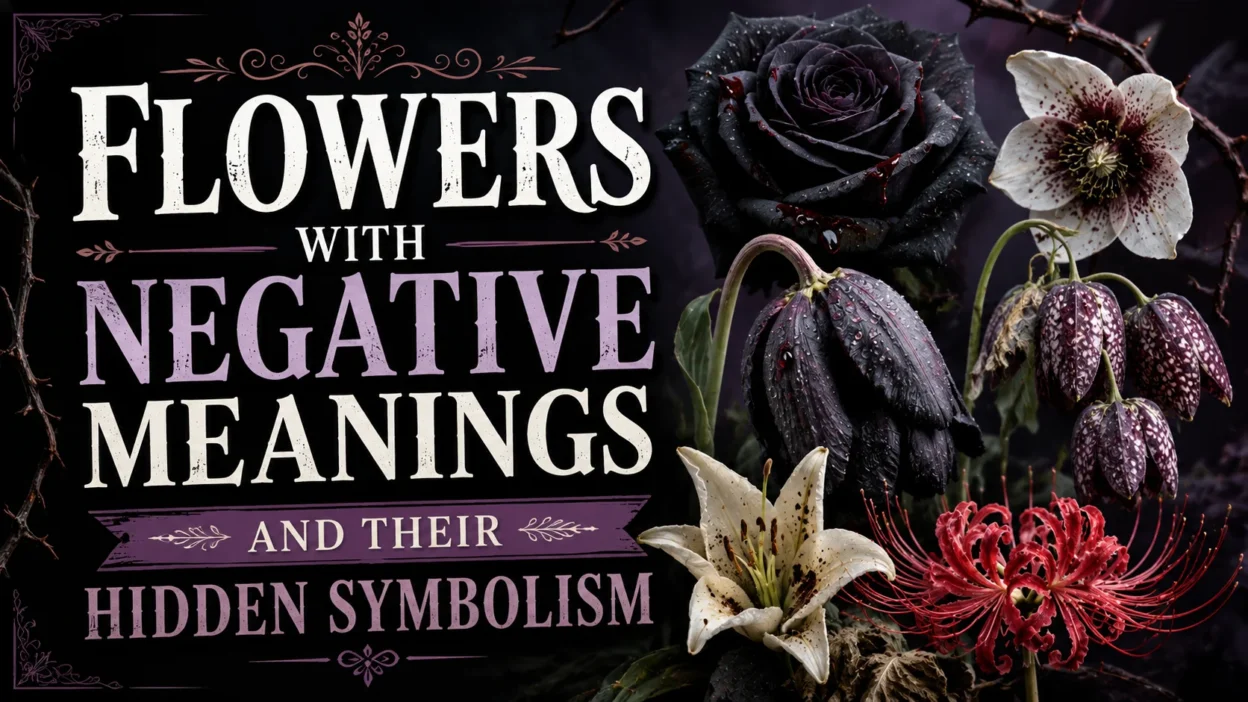
Flowers are often associated with beauty, love, happiness, and celebration. However, not every bloom carries a positive message. Throughout history, different cultures have assigned symbolic meanings to flowers, and some have become linked to sorrow, betrayal, jealousy, rejection, death, or misfortune. Understanding flowers with negative meanings can help you avoid sending the wrong message and deepen your appreciation of floral symbolism.
The language of flowers, known as floriography, became especially popular during the Victorian era. People used flowers to communicate emotions that could not be spoken openly. While many flowers symbolized affection and friendship, others conveyed disappointment, grief, anger, or warning.
Today, negative flower meanings are still referenced in literature, art, mythology, and cultural traditions. Whether you’re researching flower symbolism, choosing blooms for a story, or simply curious about darker floral meanings, this guide explores the flowers most commonly associated with negative emotions and unfortunate symbolism.
Quick Answer
Some flowers with negative meanings include yellow carnations (rejection), orange lilies (hatred), petunias (anger), black roses (death or endings), butterfly weed (separation), and marigolds (grief in some cultures). Their symbolism varies depending on tradition, culture, and historical context.
Meaning Overview Table
| Flower | Negative Meaning | Common Symbolism |
|---|---|---|
| Yellow Carnation | Rejection | Disappointment |
| Orange Lily | Hatred | Pride |
| Petunia | Anger | Resentment |
| Black Rose | Death | Endings |
| Marigold | Grief | Sorrow |
| Butterfly Weed | Separation | Departure |
| Basil Flower | Hatred | Conflict |
| Tansy | Hostility | Resistance |
| Foxglove | Insincerity | Deception |
| Lobelia | Malevolence | Harm |
What Are Negative Flower Meanings?
Negative flower meanings refer to symbolic associations linked with unpleasant emotions, warnings, or unfortunate circumstances. These meanings developed through folklore, mythology, religion, and cultural traditions.
While modern flower gifting focuses mostly on positive symbolism, many historical meanings remain widely recognized.
Common negative themes include:
- Rejection
- Jealousy
- Betrayal
- Anger
- Hatred
- Grief
- Death
- Separation
- Regret
- Deception
Yellow Carnation Meaning
Symbolism
- Rejection
- Disappointment
- Unreturned affection
Yellow carnations are among the most famous flowers with negative meanings. In traditional floriography, they symbolize rejection or feelings of disappointment in a relationship.
Historical Context
Victorian flower guides often described yellow carnations as a way of expressing disapproval or emotional distance.
Orange Lily Meaning
Symbolism
- Hatred
- Pride
- Contempt
Orange lilies are strikingly beautiful but have occasionally been associated with strong negative emotions.
Why?
Their fiery color led some traditions to connect them with intense feelings, including resentment and arrogance.
Petunia Meaning
Symbolism
- Anger
- Resentment
- Hostility
Petunias can symbolize lingering anger or frustration.
Cultural Interpretation
In some flower dictionaries, petunias represented a person whose presence could provoke conflict or irritation.
Black Rose Meaning
Symbolism
- Death
- Farewell
- Endings
- Revenge
The black rose is one of the most famous symbols of darkness and mystery.
Modern Interpretation
Although true black roses do not naturally exist, very dark red roses are often used to symbolize:
- The end of a relationship
- Major life changes
- Mourning
- Rebirth after loss
Marigold Meaning
Symbolism
- Grief
- Despair
- Mourning
Marigolds hold positive meanings in some cultures but can also symbolize sorrow.
Cultural Significance
In various traditions, marigolds are connected with remembrance of the dead and funeral ceremonies.
Butterfly Weed Meaning
Symbolism
- Separation
- Letting go
- Departure
Butterfly weed belongs to the milkweed family and traditionally symbolizes leaving someone behind.
Common Interpretation
It often appears in discussions about farewell flowers and emotional distance.
Basil Flower Meaning
Symbolism
- Hatred
- Conflict
- Dislike
Although basil is commonly valued as an herb, its flowers have historically carried negative symbolism in some regions.
Tansy Meaning
Symbolism
- Hostility
- Resistance
- Warning
Tansy has been associated with caution and emotional resistance.
Historical Use
In some traditions, it represented declarations of opposition or disagreement.
Foxglove Meaning
Symbolism
- Insincerity
- Deception
Foxglove is admired for its beauty but has sometimes been linked to dishonesty.
Why?
Its poisonous nature likely contributed to its symbolic association with hidden dangers.
Lobelia Meaning
Symbolism
- Malevolence
- Harmful intentions
Lobelia appears in some historical flower dictionaries as a symbol of ill will.
Flowers Associated With Jealousy
Several flowers have traditionally symbolized jealousy.
Yellow Rose
Possible meanings include:
- Jealousy
- Infidelity
- Suspicion
Modern meanings are usually more positive, but historical interpretations remain.
Hyacinth (Yellow)
Can symbolize:
- Jealousy
- Envy
- Competitive feelings
Flowers Associated With Betrayal
Snapdragon
Possible meanings include:
- Deception
- Concealment
- Trickery
False Jasmine
Can symbolize dishonesty or misleading appearances.
Flowers Associated With Death
Black Rose
Represents endings and mourning.
Chrysanthemum
In some European countries, chrysanthemums are strongly associated with funerals and remembrance.
White Lily
Although often symbolic of purity, white lilies are frequently connected with death and memorial services.
Flowers Associated With Bad Luck
Rhododendron
Historically associated with danger due to its toxic properties.
Monkshood
Represents danger and caution because of its poisonous nature.
Oleander
Can symbolize risk, warning, and hidden threats.
Why Do Some Flowers Have Negative Meanings?
Negative symbolism often develops from:
Toxicity
Poisonous flowers frequently become associated with danger.
Mythology
Ancient legends influence symbolic meanings.
Religious Traditions
Certain flowers appear in mourning rituals.
Historical Events
Cultural experiences shape symbolic interpretations over time.
Flowers With Mixed Meanings
Some flowers carry both positive and negative symbolism.
| Flower | Positive Meaning | Negative Meaning |
|---|---|---|
| Rose | Love | Jealousy |
| Lily | Purity | Death |
| Marigold | Celebration | Grief |
| Chrysanthemum | Happiness | Mourning |
| Hyacinth | Beauty | Jealousy |
Examples Table
| Flower | Negative Meaning |
|---|---|
| Yellow Carnation | Rejection |
| Orange Lily | Hatred |
| Petunia | Anger |
| Black Rose | Death |
| Marigold | Grief |
| Butterfly Weed | Separation |
| Basil Flower | Hatred |
| Tansy | Hostility |
| Foxglove | Deception |
| Lobelia | Malevolence |
Related Terms Table
| Related Term | Meaning |
|---|---|
| Floriography | Language of flowers |
| Symbolism | Hidden meaning |
| Mourning | Grief |
| Jealousy | Envy |
| Betrayal | Broken trust |
| Hostility | Aggression |
| Rejection | Refusal |
| Anger | Strong displeasure |
| Sorrow | Sadness |
| Toxic Plant | Poisonous flower |
| Funeral Flower | Memorial bloom |
| Mythology | Traditional stories |
| Folklore | Cultural beliefs |
| Memorial | Remembrance |
| Victorian Flowers | Symbolic flower language |
Common Uses of Negative Flower Symbolism
Literature
Writers use flowers to symbolize hidden emotions.
Poetry
Negative flower meanings add depth to themes of loss and heartbreak.
Art
Artists often use floral symbolism to communicate complex emotions.
Storytelling
Dark flowers frequently appear in fantasy, gothic, and historical fiction.
Memorial Displays
Certain flowers are chosen specifically for remembrance and mourning.
Common Mistakes
| Mistake | Correct Understanding |
|---|---|
| All flowers have positive meanings | Many have negative symbolism |
| Black roses naturally exist | Most are very dark red roses |
| Every culture shares meanings | Symbolism varies |
| Marigolds always mean happiness | They can symbolize grief |
| Yellow flowers always mean friendship | Some symbolize jealousy |
| Funeral flowers are always negative | Many also symbolize respect |
| Poisonous flowers always mean evil | Meanings differ |
| Flower meanings never change | Symbolism evolves |
| One meaning applies everywhere | Context matters |
| Negative symbolism is universal | Cultural differences exist |
Related Questions
What flower symbolizes hatred?
Orange lilies and basil flowers are commonly associated with hatred in traditional flower symbolism.
What flower means rejection?
Yellow carnations are one of the best-known flowers representing rejection.
Which flower symbolizes death?
Black roses and chrysanthemums are often linked with death and mourning.
What flower represents betrayal?
Snapdragons and certain jasmine varieties have historically been associated with deception.
FAQs
What flower has the most negative meaning?
The black rose is often considered one of the most negative flowers because it symbolizes death, endings, and farewell.
Do flower meanings vary by culture?
Yes. The same flower may have completely different meanings in different countries.
Are marigolds bad luck?
Not necessarily. They symbolize celebration in some cultures and grief in others.
Why do flowers symbolize emotions?
People have used flowers as symbolic communication tools for centuries.
What flower means anger?
Petunias are traditionally associated with anger and resentment.
Which flower symbolizes jealousy?
Yellow roses and yellow hyacinths are often linked to jealousy.
Are negative flower meanings still important today?
They are mostly used in symbolism, literature, and floral traditions rather than everyday gifting.
Can a flower have both positive and negative meanings?
Yes. Many flowers have multiple interpretations depending on context and culture.
Conclusion
Flowers are often celebrated for their beauty and positive symbolism, but many blooms carry darker meanings rooted in history, folklore, and cultural traditions. From yellow carnations representing rejection to black roses symbolizing endings and marigolds associated with grief, flowers with negative meanings reveal a fascinating side of floral language. While these interpretations vary across cultures and are less influential in modern gifting, they continue to play an important role in literature, art, mythology, and storytelling. Understanding these symbolic meanings can help you appreciate the complexity of flower symbolism and avoid unintended messages when choosing blooms for special occasions.

Lillian Hayes is a content writer focused on explaining meanings and language in a simple and clear way. She creates easy-to-understand content that helps readers learn and communicate better.