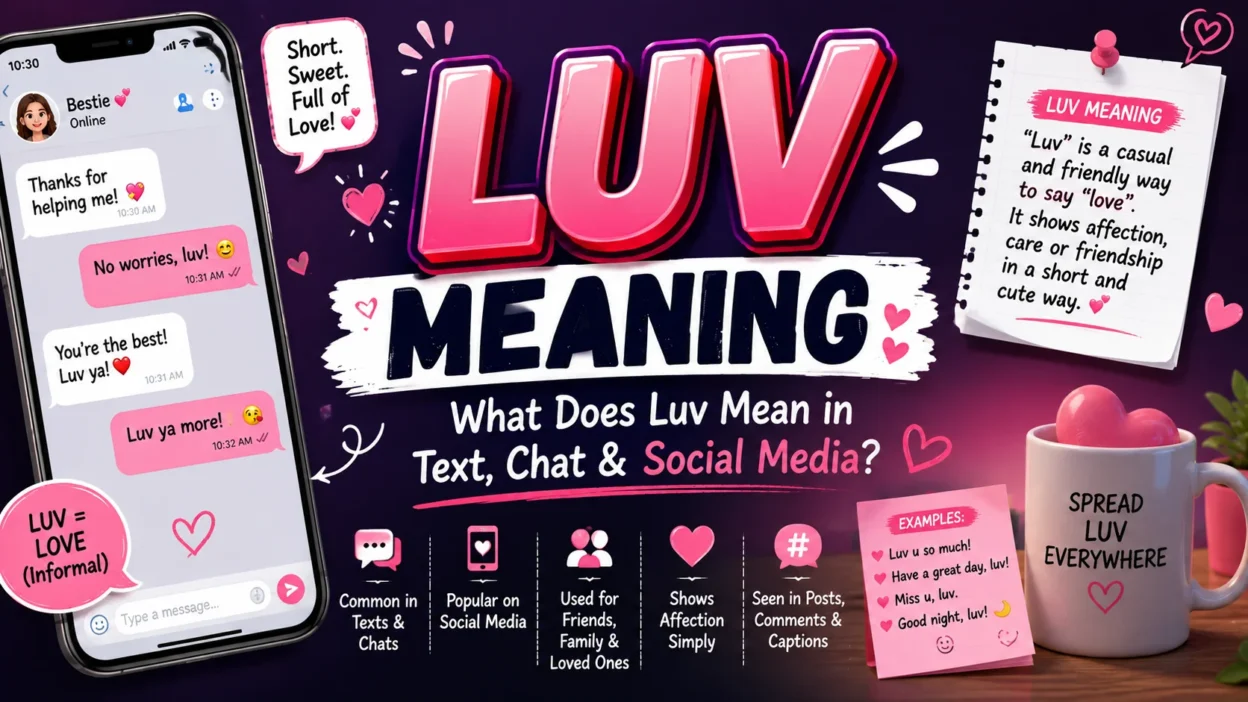
What does luv mean? If you’ve seen someone write “luv u,” “thanks luv,” or “love ya, luv,” you may wonder whether it has the same meaning as love. In most cases, luv is an informal, shortened spelling of “love.” It is commonly used in text messages, social media, online chats, and casual conversations.
Depending on the situation, luv can express romantic affection, friendship, warmth, appreciation, or simple friendliness. It does not always mean that someone is romantically in love with you.
For example, a friend might text “luv your new outfit!” simply to compliment you, while a romantic partner might say “luv u ❤️” as an affectionate message.
Understanding the context, relationship, and tone is important when interpreting luv meaning in a message.
What Does Luv Mean?
Luv is an informal spelling of the word “love.”
It is mainly used in casual communication where people want their message to sound relaxed, friendly, cute, or affectionate.
| Word | Meaning | Tone |
|---|---|---|
| Love | Strong affection or deep care | Standard |
| Luv | Informal form of love | Casual |
| Luv ya | Love you / affection | Friendly or affectionate |
| Luv u | Love you | Casual and abbreviated |
Unlike the standard spelling love, luv is generally not used in formal writing.
Luv Meaning in Text
In texting, luv usually means love, affection, or fondness.
For example:
“Luv u!”
Depending on who sends it, this could mean:
- I love you.
- I care about you.
- You’re important to me.
- I’m being affectionate.
- I’m expressing friendly warmth.
The relationship between the people involved helps determine the intended meaning.
Examples
Friend: “Luv your new haircut!”
Meaning:
“I love your new haircut!”
Partner: “Goodnight, luv ❤️”
Meaning:
An affectionate way of addressing someone they care about.
Friend: “Thanks, luv!”
Meaning:
A warm and friendly way of saying thank you.
Luv Meaning on Social Media
On social media, luv is often used to make messages sound more casual, playful, or affectionate.
You might see:
- “Luv this photo!”
- “Sending luv ❤️”
- “Luv your style!”
- “Much luv!”
- “All the luv!”
- “Luv this song!”
- “Nothing but luv!”
On social platforms, luv does not automatically indicate romantic feelings. It can simply emphasize appreciation or enthusiasm.
Does Luv Mean Love?
Yes. Luv generally represents the same basic word as “love,” but it has a more informal spelling.
The important difference is tone.
Love is the standard spelling and works in formal and informal contexts.
Luv is deliberately casual and is more common in:
- Texting
- Social media
- Messaging apps
- Comments
- Informal notes
- Casual conversations
For example:
“I love this movie.” — Standard
“I luv this movie!” — Casual and expressive
Luv Meaning From a Girl
If a girl calls you “luv” or uses luv in a message, it does not necessarily mean she is romantically interested in you.
It could mean:
- She is being friendly.
- She is showing affection.
- She is using a casual nickname.
- She is expressing appreciation.
- She has romantic feelings.
Context Matters
For example:
“Thanks, luv!”
This may simply be a friendly expression.
But:
“Goodnight, luv ❤️ I miss you.”
could carry a more romantic or emotionally intimate meaning.
The surrounding conversation is much more important than the word itself.
Luv Meaning From a Guy
The same principle applies when a guy uses luv.
For example:
“Luv your idea!”
This probably means he really likes your idea.
But:
“Miss you, luv ❤️”
could communicate personal affection or romantic interest.
Don’t assume romantic meaning based on luv alone.
What Does “Luv U” Mean?
“Luv u” means “love you.”
It is simply a shortened, informal version of the phrase.
The meaning can range from romantic affection to friendly affection.
| Message | Possible Meaning |
|---|---|
| Luv u ❤️ | Strong affection |
| Luv u bestie! | Friendly affection |
| Luv u guys! | Affection for a group |
| Luv u, Mom! | Family affection |
| Luv u too! | Returning affection |
The relationship provides the necessary context.
What Does “Luv Ya” Mean?
“Luv ya” is an informal way of saying “love you.”
It often sounds more relaxed and conversational than “I love you.”
For example:
“Thanks for everything. Luv ya!”
This could be something a close friend says without any romantic meaning.
A romantic partner could also use it as a casual expression of affection.
What Does “Much Luv” Mean?
“Much luv” means “much love” or “lots of affection.”
It is often used at the end of informal messages, social media posts, or comments.
For example:
“Thanks for supporting my new project. Much luv!”
Here, the phrase expresses gratitude and appreciation rather than romantic love.
What Does “Luv U 2” Mean?
“Luv U 2” means “Love you too.”
The number 2 represents the word “too” in informal texting.
For example:
Person A: Luv u ❤️
Person B: Luv u 2 ❤️
The second person is returning the affection.
Is Luv Romantic?
Luv can be romantic, but it isn’t always romantic.
This is one of the most important things to remember.
| Context | Likely Meaning |
|---|---|
| Romantic partner | Romantic affection |
| Close friend | Friendly affection |
| Family member | Family love |
| Social media comment | Appreciation or enthusiasm |
| Customer/service interaction | Friendly politeness |
| Casual conversation | Warmth or friendliness |
Therefore, you should consider the whole message and relationship before deciding what someone means.
Luv vs. Love
Although they represent the same basic word, their usage is different.
| Feature | Love | Luv |
|---|---|---|
| Standard spelling | ✅ | ❌ |
| Informal spelling | Sometimes | ✅ |
| Formal writing | ✅ | ❌ |
| Text messages | ✅ | ✅ |
| Social media | ✅ | ✅ |
| Casual conversation | ✅ | ✅ |
| Playful tone | Sometimes | Often |
| Romantic meaning | Possible | Possible |
Love is the standard English spelling, while luv is an informal variation.
Luv vs. Love You
“Love you” is grammatically standard.
“Luv u” is a casual text-message version.
For example:
Standard:
“Love you. Have a great day.”
Texting:
“Luv u! Have a great day ❤️”
The emotional meaning can be identical, but the second version feels more relaxed.
Why Do People Write Luv Instead of Love?
People often use luv because it is:
- Shorter
- More casual
- Playful
- Cute
- Conversational
- Common in texting
It can also make a message feel less formal.
For example:
“Love this!”
sounds normal and enthusiastic.
“Luv this!”
can sound slightly more playful or expressive.
Common Phrases With Luv
Here are some popular expressions containing luv:
| Phrase | Meaning |
|---|---|
| Luv u | Love you |
| Luv ya | Love you |
| Luv u too | Love you too |
| Much luv | Much love |
| Lots of luv | Lots of love |
| Sending luv | Sending affection or warm wishes |
| All the luv | Lots of affection or appreciation |
| Luv this | Really like this |
| My luv | An affectionate way to address someone |
| Hey luv | Friendly or affectionate greeting |
How to Respond to “Luv”
Your response should depend on your relationship with the person.
If You Feel the Same Way
You could respond:
“Luv you too ❤️”
or
“Aww, luv you too!”
If It’s a Friend
You might say:
“Luv ya too, bestie!”
If You’re Unsure
A simple response such as:
“Aww, thank you!”
can acknowledge the message without assuming romantic intent.
Is Luv a Slang Word?
Luv is generally considered an informal spelling rather than standard formal English.
It is commonly associated with casual communication, texting, and social media.
It can function like slang in some contexts because it deliberately replaces the standard spelling love, but it is better described as an informal variant.
Is Luv a Proper Word?
Luv is widely understood in informal English, but “love” remains the standard spelling.
You should use love in:
- School assignments
- Academic writing
- Business documents
- Formal emails
- Professional reports
- Official communication
Use luv mainly when you intentionally want an informal tone.
Frequently Asked Questions
What does luv mean in texting?
Luv means “love” in texting. It is an informal spelling used to express affection, appreciation, friendliness, or enthusiasm.
Does luv mean love?
Yes. Luv is an informal version of “love.” The exact emotional meaning depends on the context.
What does “luv u” mean?
“Luv u” means “love you.” It is a casual texting abbreviation and can be romantic, friendly, or familial.
Is luv romantic?
Not necessarily. Luv can be romantic, friendly, or affectionate, depending on who says it and the context.
What does “luv ya” mean?
“Luv ya” means “love you” in a relaxed and informal way.
What does “much luv” mean?
“Much luv” means “much love” or “lots of affection.” It is commonly used as a warm sign-off or social media expression.
What does “luv” mean from a girl?
It could mean affection, friendliness, appreciation, or romantic interest. The word alone isn’t enough to determine someone’s feelings.
What does “luv” mean from a guy?
It usually expresses warmth or affection, but whether it is romantic depends on the relationship and the surrounding conversation.
Is luv formal English?
No. Luv is informal. The standard spelling love should be used in formal and professional writing.
What is the difference between luv and love?
Love is the standard spelling, while luv is an informal spelling commonly used in texts, chats, and social media.
Conclusion
The luv meaning is usually simple: luv is an informal spelling of “love.” People commonly use it in text messages, social media posts, comments, and casual conversations to express affection, appreciation, friendliness, or enthusiasm.
Importantly, luv does not automatically mean romantic love. A friend may say “luv ya,” a family member may write “luv u,” or someone may comment “luv this” simply because they really like something. The relationship and surrounding message provide the real context.
If you want to keep your writing formal, use love rather than luv. But for casual texts and social media, luv is a perfectly recognizable way to give your message a more relaxed, playful, or affectionate tone.
In short, Luv = Love, with a more informal and conversational feel. ❤️

Lillian Hayes is a content writer focused on explaining meanings and language in a simple and clear way. She creates easy-to-understand content that helps readers learn and communicate better.