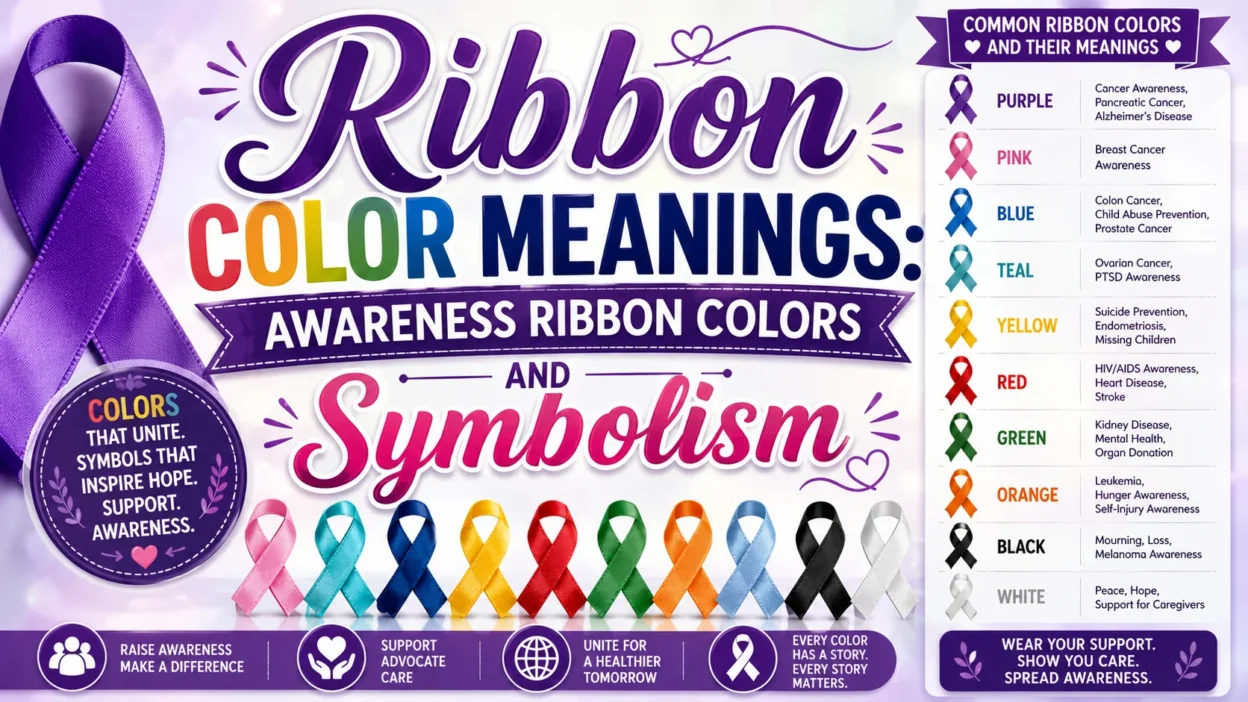
Ribbon colors have become powerful symbols of awareness, support, remembrance, advocacy, and hope around the world. Whether you see a pink ribbon during Breast Cancer Awareness Month, a red ribbon promoting HIV/AIDS awareness, or a yellow ribbon supporting military personnel, each color carries a specific meaning and message.
Awareness ribbons help bring attention to important causes, health conditions, social movements, and charitable campaigns. They serve as visual reminders that encourage education, fundraising, community support, and public understanding. Over the years, ribbon symbolism has expanded significantly, with dozens of colors representing different organizations and causes.
Understanding ribbon color meanings can help you recognize awareness campaigns, support loved ones, and participate in meaningful conversations about important issues. While some ribbon colors are universally recognized, others may represent multiple causes depending on the country, organization, or context.
This complete guide explores the most common ribbon colors, their meanings, the causes they represent, and the history behind awareness ribbons. Whether you’re researching awareness symbols, planning an event, or simply curious about ribbon symbolism, you’ll find everything you need to know right here.
Quick Answer
Ribbon color meanings vary depending on the cause they represent. Pink ribbons symbolize breast cancer awareness, red ribbons support HIV/AIDS awareness, blue ribbons often represent child abuse prevention, purple ribbons promote domestic violence awareness, yellow ribbons symbolize military support and hope, while green ribbons commonly represent mental health awareness and organ donation.
Meaning Overview Table
| Aspect | Meaning |
|---|---|
| Definition | Colored ribbons used to symbolize awareness and support |
| Pronunciation | Ribbon Color Meanings |
| Part of Speech | Noun Phrase |
| Usage | Awareness campaigns, fundraising, advocacy |
| Context | Health, social causes, memorials, support initiatives |
What Are Awareness Ribbons?
Awareness ribbons are colored strips of fabric folded into a loop and worn to show support for a specific cause, disease, social issue, or community initiative.
These ribbons serve several purposes:
- Raising public awareness
- Encouraging education
- Promoting fundraising
- Honoring victims and survivors
- Supporting advocacy efforts
- Building community solidarity
Today, awareness ribbons appear on:
- Clothing
- Pins
- Stickers
- Social media profiles
- Charity merchandise
- Event banners
- Educational materials
Because ribbons are simple, affordable, and easily recognizable, they have become one of the world’s most successful awareness symbols.
History of Awareness Ribbons
The modern awareness ribbon movement gained significant attention during the late 20th century.
Yellow ribbons became widely recognized as symbols supporting military personnel and their safe return home.
Later, health organizations adopted different ribbon colors to represent specific diseases and conditions. The pink ribbon became especially famous through breast cancer awareness campaigns, inspiring many other organizations to adopt similar symbols.
Today, awareness ribbons are used internationally to support hundreds of causes.
Pink Ribbon Meaning
Symbolism
- Hope
- Strength
- Courage
- Compassion
- Survival
Associated Cause
The pink ribbon is the internationally recognized symbol for breast cancer awareness.
Why Pink?
Pink was chosen because it represents compassion, care, and support.
Common Uses
- Breast Cancer Awareness Month
- Charity walks
- Fundraising events
- Survivor recognition programs
The pink ribbon remains one of the most recognized awareness symbols in the world.
Red Ribbon Meaning
Symbolism
- Awareness
- Solidarity
- Support
- Compassion
Associated Causes
The red ribbon is best known for:
- HIV/AIDS awareness
- AIDS prevention campaigns
Historical Significance
The red ribbon became a global symbol during efforts to educate the public about HIV and AIDS.
Additional Associations
Depending on context, red ribbons may also represent:
- Heart disease awareness
- Substance abuse awareness
Blue Ribbon Meaning
Symbolism
- Protection
- Trust
- Advocacy
- Safety
Associated Causes
Blue ribbons commonly represent:
- Child abuse prevention
- Anti-bullying awareness
- Human trafficking awareness
- Prostate cancer awareness (specific shades)
Why Blue?
Blue is often associated with trust, security, and protection.
Purple Ribbon Meaning
Symbolism
- Strength
- Courage
- Resilience
- Survival
Associated Causes
Purple ribbons support:
- Domestic violence awareness
- Alzheimer’s disease awareness
- Lupus awareness
- Pancreatic cancer awareness
Purple is frequently chosen because it symbolizes dignity and perseverance.
Yellow Ribbon Meaning
Symbolism
- Hope
- Remembrance
- Loyalty
- Support
Associated Causes
Yellow ribbons are commonly linked to:
- Military support
- Missing persons awareness
- Suicide prevention initiatives
- Endometriosis awareness
Cultural Importance
Yellow ribbons have long symbolized waiting for the return of loved ones.
Green Ribbon Meaning
Symbolism
- Healing
- Growth
- Renewal
- Recovery
Associated Causes
Green ribbons often represent:
- Mental health awareness
- Organ donation awareness
- Kidney cancer awareness
- Cerebral palsy awareness
Green’s connection to nature makes it a natural symbol of healing and recovery.
Orange Ribbon Meaning
Symbolism
- Determination
- Encouragement
- Awareness
Associated Causes
Orange ribbons may support:
- Leukemia awareness
- Kidney cancer awareness
- Hunger awareness
- Multiple sclerosis awareness
Orange is often chosen because it is highly visible and energetic.
White Ribbon Meaning
Symbolism
- Peace
- Respect
- Remembrance
- Unity
Associated Causes
White ribbons commonly represent:
- Lung cancer awareness
- Peace movements
- Anti-violence campaigns
White is frequently associated with purity and peaceful intentions.
Black Ribbon Meaning
Symbolism
- Mourning
- Grief
- Respect
- Remembrance
Associated Causes
Black ribbons may represent:
- Melanoma awareness
- Memorial observances
- Public mourning
Black ribbons are often worn following tragedies or in remembrance of loved ones.
Teal Ribbon Meaning
Symbolism
- Support
- Awareness
- Compassion
Associated Causes
Teal ribbons commonly support:
- Ovarian cancer awareness
- PTSD awareness
- Sexual assault awareness
- Cervical cancer awareness
Teal has become one of the most recognized awareness ribbon colors.
Gold Ribbon Meaning
Symbolism
- Strength
- Courage
- Hope
- Value
Associated Cause
Gold ribbons are widely recognized for:
- Childhood cancer awareness
Why Gold?
Gold symbolizes how precious children are and highlights the importance of supporting pediatric cancer research.
Silver Ribbon Meaning
Symbolism
- Wisdom
- Recognition
- Awareness
Associated Causes
Silver ribbons may support:
- Brain disorders
- Neurological diseases
- Mental health initiatives
Lavender Ribbon Meaning
Symbolism
- Understanding
- Compassion
- Support
Associated Causes
Lavender ribbons often represent:
- General cancer awareness
- Rare disease awareness
Because lavender combines blue and pink tones, it is often used as a universal cancer awareness symbol.
Rainbow Ribbon Meaning
Symbolism
- Diversity
- Inclusion
- Equality
- Unity
Associated Causes
Rainbow ribbons commonly support:
- LGBTQ+ awareness
- Equality campaigns
- Human rights initiatives
The rainbow ribbon celebrates diversity and acceptance.
Burgundy Ribbon Meaning
Symbolism
- Determination
- Strength
- Support
Associated Causes
Burgundy ribbons may represent:
- Sickle cell disease awareness
- Headache and migraine awareness
Pearl Ribbon Meaning
Symbolism
- Hope
- Awareness
- Advocacy
Associated Cause
Pearl ribbons are commonly associated with:
- Lung cancer awareness
Periwinkle Ribbon Meaning
Symbolism
- Compassion
- Awareness
- Support
Associated Causes
Periwinkle ribbons often represent:
- Eating disorder awareness
- Pulmonary hypertension awareness
Most Common Ribbon Colors and Meanings
| Ribbon Color | Common Meaning |
|---|---|
| Pink | Breast Cancer Awareness |
| Red | HIV/AIDS Awareness |
| Blue | Child Abuse Prevention |
| Purple | Domestic Violence Awareness |
| Yellow | Military Support |
| Green | Mental Health Awareness |
| Orange | Leukemia Awareness |
| White | Peace and Lung Cancer Awareness |
| Black | Mourning and Melanoma Awareness |
| Teal | Ovarian Cancer Awareness |
| Gold | Childhood Cancer Awareness |
| Rainbow | LGBTQ+ Awareness |
Ribbon Colors for Health Awareness
Health organizations use ribbons to promote education and support.
| Condition | Ribbon Color |
|---|---|
| Breast Cancer | Pink |
| Ovarian Cancer | Teal |
| Childhood Cancer | Gold |
| HIV/AIDS | Red |
| Mental Health | Green |
| Lung Cancer | White or Pearl |
| Pancreatic Cancer | Purple |
| Prostate Cancer | Light Blue |
| Leukemia | Orange |
| Lupus | Purple |
Ribbon Colors for Social Causes
Awareness ribbons also support important social issues.
Examples include:
- Domestic violence awareness
- Child abuse prevention
- Anti-bullying campaigns
- Human rights advocacy
- Peace movements
- Military support initiatives
- LGBTQ+ equality campaigns
These ribbons help communities unite around shared goals.
Why Ribbon Colors Matter
Ribbon colors are effective because they create instant recognition.
Benefits include:
Raising Awareness
People learn about important causes through visual symbols.
Encouraging Conversations
Ribbons often inspire discussions that increase understanding.
Supporting Fundraising
Many awareness organizations use ribbons during fundraising campaigns.
Honoring Survivors
Ribbons recognize individuals who have overcome challenges.
Building Community
Awareness campaigns bring people together around important causes.
How to Choose the Right Ribbon Color
When selecting a ribbon:
- Identify the cause you want to support.
- Confirm the official ribbon color used by major organizations.
- Consider regional variations.
- Use educational materials when sharing awareness information.
This helps ensure your message is accurate and respectful.
Examples Table
| Example | Meaning |
|---|---|
| Pink ribbon pin | Breast cancer support |
| Red ribbon bracelet | HIV/AIDS awareness |
| Blue ribbon campaign | Child protection |
| Purple ribbon event | Domestic violence awareness |
| Yellow ribbon display | Military support |
| Green ribbon badge | Mental health advocacy |
| Orange ribbon fundraiser | Leukemia awareness |
| White ribbon initiative | Peace campaign |
| Black ribbon memorial | Remembrance |
| Teal ribbon walk | Ovarian cancer awareness |
Related Terms Table
| Related Term | Meaning |
|---|---|
| Awareness Campaign | Public education effort |
| Advocacy | Supporting a cause |
| Fundraising | Collecting donations |
| Prevention | Reducing risk |
| Survivor | Person who overcame illness |
| Charity | Organization helping others |
| Memorial | Remembrance event |
| Health Awareness | Public health education |
| Community Support | Collective assistance |
| Nonprofit | Mission-driven organization |
| Volunteer | Person offering help |
| Education | Informing the public |
| Equality | Fair treatment |
| Inclusion | Acceptance of all people |
| Outreach | Community engagement |
Common Uses
Awareness Months
Organizations use ribbons during awareness months.
Charity Events
Walks, runs, and fundraisers often feature ribbon symbols.
Social Media
Users add ribbon graphics to profiles and awareness posts.
Schools
Educational campaigns frequently use ribbons.
Community Programs
Local organizations distribute ribbons to encourage participation.
Common Mistakes
| Mistake | Correct Understanding |
|---|---|
| Every color has one meaning | Some colors represent multiple causes |
| Ribbon meanings are universal | Meanings may vary by organization |
| Pink represents all cancers | It specifically represents breast cancer |
| Blue always means one cause | Different shades may vary |
| All ribbons are medical | Many support social causes |
| Black only means death | It can also represent awareness |
| Yellow only means military support | It has several meanings |
| Green only means environmental causes | Often linked to mental health |
| Ribbon colors never change | Some campaigns update symbolism |
| All organizations use identical colors | Variations exist |
Related Questions
What is the most recognized awareness ribbon?
The pink ribbon for breast cancer awareness is widely considered the most recognized awareness ribbon globally.
What does a purple ribbon stand for?
Purple ribbons commonly represent domestic violence awareness, lupus awareness, and pancreatic cancer awareness.
What does a green ribbon mean?
Green ribbons are most often associated with mental health awareness, organ donation, and recovery.
What does a yellow ribbon symbolize?
Yellow ribbons traditionally symbolize hope, military support, and the safe return of loved ones.
FAQs Ribbon Color Meanings
What does a pink ribbon mean?
A pink ribbon symbolizes breast cancer awareness, support, hope, and survivor recognition.
What is the red ribbon used for?
The red ribbon represents HIV/AIDS awareness and global solidarity.
What does a blue ribbon stand for?
Blue ribbons commonly symbolize child abuse prevention and protection initiatives.
Why are awareness ribbons important?
They raise awareness, encourage education, support fundraising, and honor affected individuals.
What does a teal ribbon mean?
Teal ribbons often represent ovarian cancer awareness and sexual assault awareness.
What ribbon color represents mental health?
Green is the most widely recognized ribbon color for mental health awareness.
What does a gold ribbon symbolize?
Gold ribbons represent childhood cancer awareness and support for affected families.
Can one ribbon color have multiple meanings?
Yes. Many ribbon colors are used by different organizations for different causes.
Conclusion
Ribbon color meanings play an important role in awareness campaigns, health advocacy, social movements, and community support efforts. From the pink ribbon representing breast cancer awareness to the green ribbon promoting mental health awareness and the yellow ribbon symbolizing hope and military support, each color tells a meaningful story. Awareness ribbons help educate the public, honor survivors, support fundraising efforts, and unite communities around important causes.
While some ribbon colors represent multiple issues depending on context, their shared purpose remains the same: encouraging understanding, compassion, and action. By learning the meanings behind awareness ribbon colors, you can better support the causes that matter most and help spread awareness in a meaningful way.

Lillian Hayes is a content writer focused on explaining meanings and language in a simple and clear way. She creates easy-to-understand content that helps readers learn and communicate better.