Have you ever heard someone say, “I’m stopping by the bodega,” or seen the word bodega in a movie, song, or social media post? If you have, you might wonder what it means and why people use it so often.
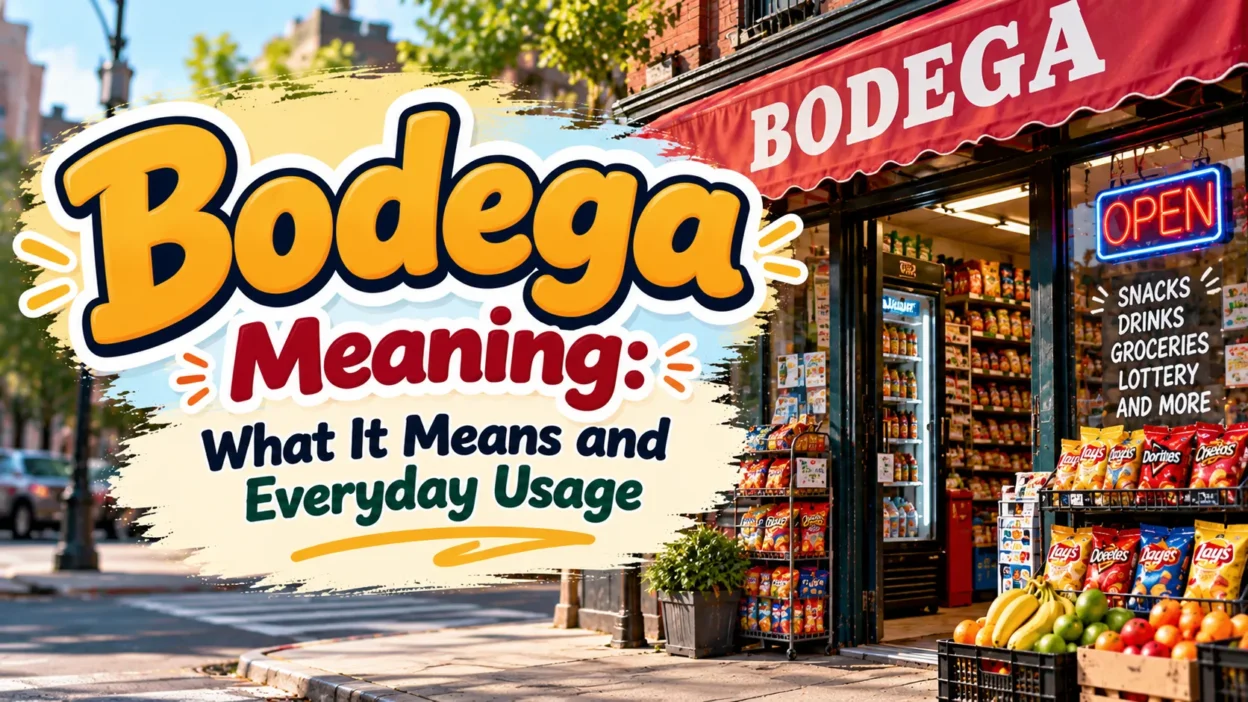
Bodega usually means a small neighborhood grocery store or convenience shop, especially in New York City. These stores often sell snacks, drinks, groceries, household essentials, and ready-to-eat food. Many also prepare sandwiches, coffee, and other quick meals for people on the go.
However, the word has a broader meaning in Spanish, where bodega can refer to a wine cellar, storage room, warehouse, or shop selling goods. Its exact meaning depends on the country and context.
In American culture, especially in New York, bodegas are more than places to buy everyday items. They often serve as familiar neighborhood gathering spots where customers know the owners and stop by throughout the day.
This guide explains the meaning of bodega, its origin, how people use it in conversations, and the differences between a bodega, a convenience store, and a grocery store.
📖 What Does Bodega Mean?
A bodega is a small neighborhood store that sells everyday necessities, particularly in New York City and other communities influenced by Spanish-speaking cultures.
A typical American bodega may sell:
- Snacks, candy, and chips
- Bottled water, soda, and juice
- Bread, milk, eggs, and basic groceries
- Coffee and freshly prepared sandwiches
- Toiletries and household essentials
- Newspapers, phone chargers, and other convenient items
Many bodegas stay open for long hours, making them useful for people who need something quickly without visiting a large supermarket.
For example, someone might say, “I’ll grab a sandwich from the bodega before work.” This means they plan to buy a sandwich from a nearby neighborhood store.
The word can also have different meanings outside the United States. In Spanish-speaking countries, it may refer to a warehouse, cellar, or other place used to store goods. Therefore, the location and surrounding conversation help determine the intended meaning.
🏪 What Does Bodega Mean in New York?
In New York City, a bodega is a small, locally operated convenience store that serves people living and working in the surrounding neighborhood.
Bodegas are particularly associated with New York’s urban culture. They often occupy street-level storefronts and remain accessible to residents who need groceries, snacks, coffee, or a quick meal.
Unlike large supermarkets, many bodegas focus on convenience and familiar service. Customers may visit the same shop every morning, recognize the people working behind the counter, and know exactly where to find their favorite sandwich.
For example:
- “I’m going to the bodega for a bacon, egg, and cheese sandwich.”
- “The bodega downstairs sells my favorite chips.”
- “Let’s stop at the bodega before heading home.”
- “I picked up some milk and snacks at the neighborhood bodega.”
In New York, the word often carries a sense of familiarity and community. A bodega can be a practical place to shop and an important part of the neighborhood’s everyday life.
🌎 What Is the Origin of the Word Bodega?
The word bodega comes from Spanish, which adopted it from the Latin apotheca, meaning a storehouse or place for storing goods. The Latin term is also related to the origin of the English word apothecary.
Over time, the Spanish word developed several meanings associated with storage, shops, and cellars. Its precise use varies by region.
In Spain, for example, bodega commonly refers to a wine cellar or winery. In other Spanish-speaking settings, it can describe a warehouse or a place where merchandise is stored or sold.
Also In the United States, the word became especially associated with small neighborhood grocery stores in New York City. This usage reflects the city’s history of immigration, Spanish-speaking communities, and locally owned businesses.
Today, bodega is widely recognized in American English, particularly when people discuss New York neighborhoods, local food, or urban culture.
🛒 What Is the Difference Between a Bodega and a Convenience Store?
A bodega and a convenience store can sell many of the same products, but the terms do not always carry the same cultural meaning.
A convenience store is a broad category of retail shop that sells everyday items for quick purchases. A bodega, in the New York sense, usually refers to a neighborhood shop with a local identity and, often, a deli counter.
| Feature | Bodega | Convenience Store |
|---|---|---|
| Typical location | Urban neighborhoods, especially New York City | Cities, suburbs, highways, and residential areas |
| Main purpose | Quick shopping and neighborhood service | Quick access to everyday essentials |
| Food options | Often includes deli sandwiches and prepared food | May offer packaged food and prepared meals |
| Community connection | Often strongly associated with the local neighborhood | Varies by store |
| Common products | Groceries, snacks, drinks, household items | Snacks, drinks, groceries, travel essentials |
| Cultural association | Strongly linked to New York City | Used broadly throughout the United States |
These categories overlap. A bodega can function as a convenience store, but not every convenience store is commonly called a bodega.
For example, a small New York shop selling groceries and made-to-order sandwiches may be called a bodega. A shop attached to a gas station in another state would more commonly be called a convenience store.
🥪 What Is a Bodega Sandwich?
A bodega sandwich is a sandwich prepared or sold at a neighborhood bodega, particularly in New York City.
Many New York bodegas have deli counters where customers can order sandwiches made to their preferences. Breakfast sandwiches are especially popular, including combinations of eggs, cheese, and bacon or sausage served on a roll, bagel, or other bread.
Popular examples include:
- Bacon, egg, and cheese
- Sausage, egg, and cheese
- Ham and cheese
- Turkey and cheese
- Grilled chicken sandwiches
- Deli sandwiches with lettuce, tomato, and condiments
A classic New York breakfast order is a bacon, egg, and cheese sandwich on a roll. People often pick one up with a coffee on their way to work or school.
The phrase bodega sandwich does not describe one specific recipe. It refers more broadly to the convenient, familiar sandwiches sold at these neighborhood shops.
🐈 Why Are Cats Associated With Bodegas?
Bodega cats are cats that live in or regularly spend time inside neighborhood bodegas and similar small shops. They have become a recognizable part of New York City popular culture.
Some store owners keep cats to help control rodents, although local rules and food-safety requirements may restrict animals in areas where food is prepared or stored.
Bodega cats also appear in social media posts, photographs, memes, and neighborhood stories. Their popularity has made them a familiar symbol of the city’s small-store culture.
For example:
- “I stopped for coffee and met the bodega cat.”
- “Every New York neighborhood seems to have its own famous bodega cat.”
- “The bodega cat is the unofficial manager of the store.”
The expression bodega cat refers to the cat, not to a particular type of store. It has become a playful cultural reference associated with New York’s neighborhood shops.
💬 What Does Bodega Mean in Slang?
In American English, bodega is not usually slang in the sense of an invented or informal abbreviation. It is an established word used for a particular kind of shop.
However, people sometimes use it casually when talking about neighborhood food, New York life, or urban culture.
For example:
- “Meet me at the bodega on the corner.”
- “I’m making a quick bodega run.”
- “Nothing beats a fresh bodega sandwich.”
- “The bodega downstairs has everything I need.”
The phrase “bodega run” informally means a quick trip to a bodega to buy something.
The word may also appear in songs, movies, comedy, and online discussions about New York City. In those settings, it can evoke the familiar atmosphere of a neighborhood shop.
It is important to distinguish this everyday American meaning from the broader Spanish meaning. If someone uses bodega while discussing wine production or storage, they may not be referring to a convenience store at all.
🇪🇸 What Does Bodega Mean in Spanish?
In Spanish, bodega has several meanings, and the intended definition depends on the country and situation.
Common uses include:
- Wine cellar: A place where wine is stored or aged.
- Winery: A business involved in producing or storing wine.
- Warehouse: A building or room used to store goods.
- Storage room: A space used to keep supplies or merchandise.
- Shop or store: In certain regional contexts, a place that sells goods.
For example, the Spanish sentence “Visitamos una bodega” could mean “We visited a winery” or “We visited a wine cellar,” depending on the context.
In another setting, the word could refer to a storage facility or shop.
This is why translating bodega directly into English without considering the surrounding sentence can produce the wrong meaning.
✍️ How to Use Bodega in a Sentence
You can use bodega when discussing a neighborhood store, a quick food purchase, or a Spanish-speaking context involving storage or wine.
Here are some examples with their meanings.
Everyday American English
- “I stopped at the bodega to buy a bottle of water.” — A neighborhood store.
- “She’s picking up breakfast from the bodega.” — A shop that sells prepared food.
- “There’s a great bodega around the corner.” — A nearby neighborhood convenience shop.
- “We made a quick bodega run before the movie.” — A short trip to buy something.
Spanish and wine-related contexts
- “The tour included a visit to a local bodega.” — A winery or wine cellar.
- “The bottles were stored in the bodega.” — A cellar or storage area, depending on the setting.
Travel and culture
- “Visiting a neighborhood bodega gave us a glimpse of daily life in New York.” — A local shop.
- “The documentary explored the history of family-owned bodegas.” — Small neighborhood stores.
In each example, the context clarifies which meaning applies.
🏙️ Why Are Bodegas Important to Neighborhoods?
Bodegas can play an important role in the daily lives of residents, especially in densely populated urban areas.
They offer convenient access to groceries, drinks, snacks, and other necessities. For customers without a car or those who do not want to travel to a large supermarket, a nearby shop can make everyday errands easier.
Many bodegas also build long-term relationships with their customers. Regular visitors may know the owner, recognize the staff, and stop by for a familiar breakfast or quick conversation.
Their role can include:
- Providing convenient access to basic groceries.
- Selling affordable, ready-to-eat food options.
- Serving people who live or work nearby.
- Offering extended opening hours in some locations.
- Supporting local business owners and workers.
- Contributing to the character of a neighborhood.
Not every bodega offers all these services, and operating hours and product selections vary. Still, the term often represents more than a retail business: it evokes a familiar part of everyday neighborhood life.
❓ Frequently Asked Questions About Bodega Meaning
What does bodega mean in simple words?
A bodega is usually a small neighborhood grocery or convenience store, especially in New York City. In Spanish, it can also mean a wine cellar, winery, warehouse, or storage room.
Is a bodega the same as a grocery store?
Not exactly. A bodega sells groceries and other everyday products, but it is usually smaller than a traditional supermarket. Many New York bodegas also have deli counters that prepare sandwiches and other quick meals.
What does bodega mean in New York slang?
In New York, bodega is a common everyday word for a small neighborhood convenience shop. It is an established term rather than merely a slang abbreviation.
What is a bodega run?
A bodega run is an informal expression for making a quick trip to a neighborhood store to buy snacks, drinks, groceries, or other essentials.
What is a bodega cat?
A bodega cat is a cat that lives in or regularly spends time at a bodega or similar neighborhood shop. The phrase is especially associated with New York City culture.
What does bodega mean in Spanish?
In Spanish, bodega can mean a wine cellar, winery, warehouse, storage room, or shop, depending on the region and context.
What is a bodega sandwich?
A bodega sandwich is a sandwich sold or prepared at a neighborhood bodega. In New York, popular choices include bacon, egg, and cheese sandwiches and other deli-style meals.
Is bodega an English word?
Yes. Bodega is an established English word borrowed from Spanish. American English commonly uses it to refer to a small neighborhood grocery or convenience store.
How do you pronounce bodega?
Bodega is commonly pronounced boh-DAY-guh in American English. The middle syllable receives the main stress.
Why are bodegas associated with New York City?
Bodegas are strongly associated with New York because small neighborhood grocery shops have long served its diverse communities. The word has become part of the city’s everyday vocabulary and cultural identity.
✅ Conclusion
Bodega usually means a small neighborhood grocery or convenience store, especially in New York City. These shops provide everyday essentials, snacks, drinks, sandwiches, and other convenient items while often serving as familiar neighborhood businesses.
The word comes from Spanish, where it can also refer to a wine cellar, winery, warehouse, or storage room. Its meaning therefore depends on the language, location, and context in which it appears.
Whether someone mentions a bodega sandwich, a bodega cat, or a quick bodega run, the word often brings to mind a small local shop that is part of everyday life. Understanding these different uses will help you recognize the word in conversations, movies, social media posts, and travel articles.

Lillian Hayes is a content writer focused on explaining meanings and language in a simple and clear way. She creates easy-to-understand content that helps readers learn and communicate better.