
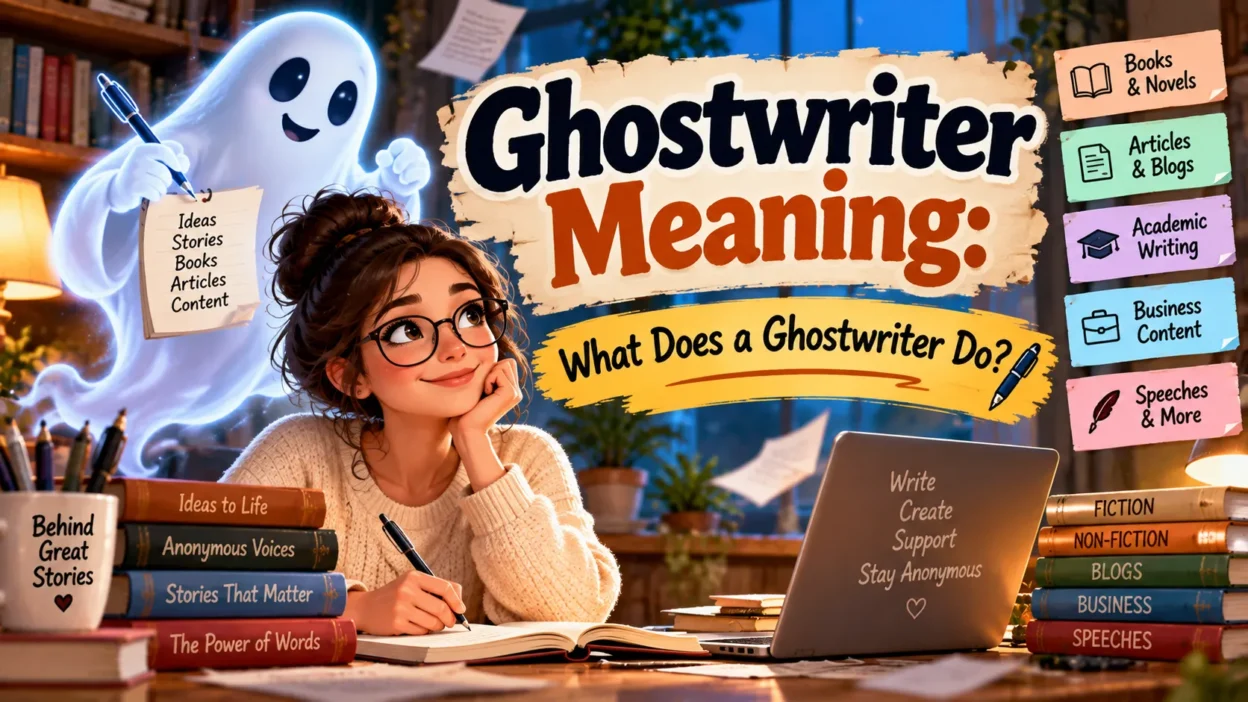
Have you ever read a celebrity’s autobiography or a bestselling book and wondered who actually wrote it? The answer might be a ghostwriter. The ghostwriter meaning refers to a person who writes content for someone else, usually without receiving public credit as the author. The client typically publishes the finished work under their own name.
Ghostwriters help people turn their ideas, experiences, and knowledge into well-written content. They may write books, speeches, blog posts, business articles, social media posts, and even song lyrics. Although the ghostwriter does much of the writing, the client usually receives the public recognition.
Ghostwriting is common in publishing, business, entertainment, and digital marketing. Some professionals hire ghostwriters because they have valuable ideas but lack the time or writing skills to express them effectively.
In this guide, you’ll learn what a ghostwriter means, what ghostwriters do, how they earn money, and how ghostwriting differs from other writing jobs.
📖 What Does Ghostwriter Mean?
A ghostwriter is someone who writes content for another person or organization that receives the primary public credit for the finished work. The ghostwriter may conduct interviews, research a topic, organize ideas, write drafts, and revise the content according to the client’s requirements.
The word combines ghost and writer. The word ghost suggests that the writer works behind the scenes rather than appearing as the publicly credited author.
For example, a successful entrepreneur might want to publish a book about building a business. The entrepreneur shares personal experiences, lessons, and ideas with a ghostwriter. The writer then organizes those details into chapters and develops a complete manuscript. When the book reaches readers, the entrepreneur’s name may appear on the cover.
Here are some simple examples:
- A celebrity hires a ghostwriter to write an autobiography.
- A business owner hires a writer to create LinkedIn posts.
- A politician works with a ghostwriter to prepare a speech.
- An entrepreneur hires a professional to write a business book.
- A public speaker asks a ghostwriter to develop a presentation.
In each example, the ghostwriter provides writing expertise while the client receives most or all of the public recognition.
✍️ What Does a Ghostwriter Do?
A ghostwriter does more than write sentences. The job often involves research, interviews, planning, editing, and communication with the client.
The responsibilities depend on the project. Writing a memoir requires different skills from creating social media posts or preparing a business speech.
Common ghostwriting tasks include:
- Interviewing clients: Asking questions to understand their experiences, opinions, goals, and writing preferences.
- Researching topics: Collecting reliable information and checking facts before including them in the content.
- Creating outlines: Organizing ideas into chapters, sections, articles, or speeches.
- Writing drafts: Turning the client’s information into clear and engaging content.
- Matching the client’s voice: Using a tone and vocabulary that reflect how the client communicates.
- Editing and revising: Improving grammar, readability, structure, and accuracy.
- Managing feedback: Making changes based on the client’s comments.
- Maintaining confidentiality: Protecting private information and following the agreed terms.
A good ghostwriter listens carefully and asks thoughtful questions before beginning the writing process. The goal is to communicate the client’s ideas naturally rather than simply produce impressive sentences.
📚 What Types of Content Do Ghostwriters Write?
Ghostwriters work in several industries and specialize in different formats. Some focus on books, while others create digital content, speeches, or professional communication.
1. Books and Memoirs
Authors, celebrities, entrepreneurs, and public figures sometimes hire ghostwriters to develop books. These projects may include autobiographies, memoirs, business books, novels, and self-help guides.
The client usually provides the main ideas, personal experiences, or outline. The ghostwriter turns that material into a complete manuscript.
2. Blog Posts and Articles
Businesses and professionals hire ghostwriters to create informative articles for websites and publications. These articles can cover industry trends, professional advice, personal experiences, and educational topics.
For example, a marketing consultant might share expertise during an interview, allowing the ghostwriter to turn those insights into a polished blog post.
3. Speeches and Presentations
Executives, politicians, public speakers, and business leaders may need help preparing speeches. Ghostwriters organize their ideas into a clear message that suits the audience and occasion.
A speechwriter may also adjust the language to match the speaker’s personality and delivery style.
4. Social Media Posts
Ghostwriters often help entrepreneurs, influencers, and executives maintain an active online presence. They may create LinkedIn posts, Instagram captions, newsletters, or other short-form content.
The best results come when clients provide their genuine opinions and experiences. The writer then shapes those ideas into engaging posts.
5. Scripts and Creative Projects
Some ghostwriters help develop podcast scripts, video scripts, song lyrics, and other creative material. Their responsibilities depend on the agreement and the type of project.
These assignments may require storytelling, dialogue writing, audience research, or collaboration with other creative professionals.
💼 What Does Ghostwriter Mean in Business?
In business, a ghostwriter creates content for an executive, entrepreneur, consultant, or company representative. The client supplies the expertise and opinions, while the writer helps communicate them clearly.
Imagine that a startup founder wants to publish three LinkedIn posts every week. The founder understands the industry but has little time to write. A ghostwriter can interview the founder, collect useful insights, and develop posts that reflect the founder’s perspective.
Business ghostwriters commonly create:
- LinkedIn posts and articles
- Company blog posts
- Executive newsletters
- Industry reports
- Business books
- Speeches and presentations
- Thought-leadership articles
This service allows professionals to share knowledge consistently without handling every stage of writing themselves.
However, responsible ghostwriting requires accuracy. A writer should not invent personal experiences, professional qualifications, or opinions and then present them as the client’s real views. Instead, the writer should work from genuine information and verify important claims.
💰 How Much Does a Ghostwriter Make?
Ghostwriter earnings depend on experience, project complexity, subject knowledge, client budgets, and the amount of research involved. Some writers charge by the word or hour, while others negotiate a fixed fee for an entire project.
For example, a short article may require only a few hours of work, while a full-length book may take several months to complete.
Common payment arrangements include:
| Payment method | How it works |
|---|---|
| Per word | The client pays for each word written. |
| Per hour | The writer charges for time spent working. |
| Per article | The client pays a fixed amount for each article or post. |
| Per project | The writer agrees on a total fee for a book, speech, or content package. |
| Monthly retainer | The client pays a recurring fee for ongoing writing services. |
There is no single standard rate for every ghostwriting assignment. A simple blog post usually involves less work than a memoir that requires interviews, extensive research, and multiple revisions.
Before accepting a project, writers should clarify the scope, deadlines, payment schedule, revision limits, and ownership rights. Clients should also discuss confidentiality and whether the writer can mention the project in a portfolio.
🧠 What Skills Does a Ghostwriter Need?
Successful ghostwriters combine strong writing skills with research, communication, organization, and adaptability. They must understand the client’s message and express it in a way that connects with the intended audience.
Important skills include:
Writing and editing: Ghostwriters need good grammar, clear sentence structure, and the ability to organize complex ideas.
Research: Many projects require accurate facts, background information, interviews, and reliable sources.
Listening and interviewing: Clients may explain their ideas verbally. A ghostwriter must ask useful questions and identify the most important details.
Voice matching: The writer should reflect the client’s tone, personality, vocabulary, and preferred communication style.
Time management: Long projects often involve several drafts, deadlines, meetings, and rounds of feedback.
Confidentiality: Clients may share personal stories, business information, or unpublished ideas. Professional writers must respect agreed privacy requirements.
Adaptability: A ghostwriter may need to write a conversational social media post one day and a formal business article the next.
These abilities help writers produce content that feels authentic to the client while meeting professional standards.
🔄 Ghostwriter vs. Copywriter vs. Content Writer
Ghostwriters, copywriters, and content writers all create written material, but their roles often differ in purpose and authorship.
| Feature | Ghostwriter | Copywriter | Content writer |
|---|---|---|---|
| Main purpose | Write in a client’s voice | Persuade readers to take action | Inform or educate readers |
| Common work | Books, speeches, executive posts | Ads, sales pages, product descriptions | Blogs, guides, articles |
| Public credit | Usually goes to the client | Depends on the agreement | Depends on the publication |
| Main skill | Voice matching and collaboration | Persuasion and conversion | Research and clear explanation |
These roles can overlap. A ghostwriter may write persuasive sales content, while a content writer may create articles without receiving a byline.
The main distinction is that ghostwriting focuses on producing content for someone else who typically receives the public credit.
⚖️ Is Ghostwriting Legal and Ethical?
Ghostwriting is generally a legitimate professional service when the parties agree on authorship, payment, rights, and confidentiality. Businesses, authors, executives, and public figures commonly hire writers to help communicate their ideas.
However, the ethics depend on how someone uses the finished work.
For example, hiring a ghostwriter to help create a memoir is a common publishing arrangement. Hiring someone to complete an academic assignment that a student must submit as their own independent work may violate academic-integrity rules.
A professional agreement should clarify:
- Who owns the finished content
- Who receives public credit
- Whether the writer can disclose the collaboration
- How many revisions the fee includes
- What confidentiality rules apply
- Whether the client can modify or republish the work
- When and how the client will pay
Both parties should also avoid plagiarism, fabricated sources, and misleading claims. Clear agreements help prevent misunderstandings and protect the interests of the writer and client.
🚀 How to Become a Ghostwriter
You do not necessarily need a specific degree to become a ghostwriter. However, strong writing skills, subject knowledge, and the ability to work with clients are essential.
If you want to enter this field, follow these steps.
1. Choose a specialty. Decide whether you want to write books, business articles, speeches, blog posts, or social media content.
2. Improve your writing. Practice research, editing, storytelling, grammar, and adapting your tone for different audiences.
3. Create writing samples. Develop original articles, sample chapters, or social media posts that demonstrate your abilities. Never present fictional assignments as real client work.
4. Build a portfolio. Collect suitable samples and describe your services. Respect confidentiality agreements when sharing commissioned work.
5. Find clients. Explore freelance marketplaces, professional networking platforms, writing agencies, referrals, and direct outreach to businesses or authors.
6. Set clear rates. Explain your fees, deadlines, revision limits, payment terms, and confidentiality requirements before starting.
7. Build professional relationships. Deliver quality work, communicate clearly, and meet deadlines. Satisfied clients may return with new projects or recommend your services.
Beginners can start with smaller assignments, such as blog posts or social media content, before taking on large projects like full-length books.
❓ Frequently Asked Questions About Ghostwriter Meaning
What is a ghostwriter in simple words?
A ghostwriter is someone who writes content for another person, who usually receives public credit for the finished work. The writer works behind the scenes to turn the client’s ideas into written material.
Why is it called a ghostwriter?
The name suggests that the writer works invisibly behind the scenes. The writer creates the content, but their name may not appear on the final publication.
Do ghostwriters get credit for their work?
Often, they do not receive a public byline. However, some projects include shared credit, an acknowledgment, or another arrangement agreed upon by the writer and client.
Do celebrities use ghostwriters?
Yes. Some celebrities hire ghostwriters to help create autobiographies, memoirs, books, speeches, and other content. The writer may interview the celebrity and organize their experiences into a complete manuscript.
Is ghostwriting the same as plagiarism?
No. Ghostwriting involves an agreed arrangement in which a writer creates content for a client. Plagiarism involves using another person’s work or ideas improperly. However, ghostwriting can raise ethical concerns when someone uses it to misrepresent their work in a setting that requires independent authorship.
Can beginners become ghostwriters?
Yes. Beginners can develop their skills through practice, original writing samples, smaller freelance projects, and professional networking. Building a specialty and delivering reliable work can help attract clients.
What is a ghostwriter for a book?
A book ghostwriter helps someone develop and write a book under the client’s name or another agreed credit arrangement. The process may involve interviews, research, outlining, drafting, editing, and revisions.
What is the difference between a ghostwriter and an editor?
A ghostwriter creates substantial written content from a client’s ideas, notes, interviews, or outline. An editor primarily reviews existing writing and improves its clarity, structure, accuracy, and readability.
Can a ghostwriter write social media posts?
Yes. Ghostwriters often create posts for entrepreneurs, executives, influencers, and public figures. They aim to reflect the client’s genuine ideas, opinions, and communication style.
✅ Conclusion
The ghostwriter meaning refers to a person who writes content for someone else, who usually receives public credit for the finished work. Ghostwriters work on books, memoirs, speeches, business articles, blog posts, and social media content.
The profession requires more than good writing. Successful ghostwriters also need research skills, careful listening, organization, voice matching, and respect for confidentiality.
Whether you want to hire a ghostwriter or become one, understanding the working arrangement is essential. Clear expectations about credit, payment, ownership, and responsibilities help create a successful professional partnership.

Lillian Hayes is a content writer focused on explaining meanings and language in a simple and clear way. She creates easy-to-understand content that helps readers learn and communicate better.