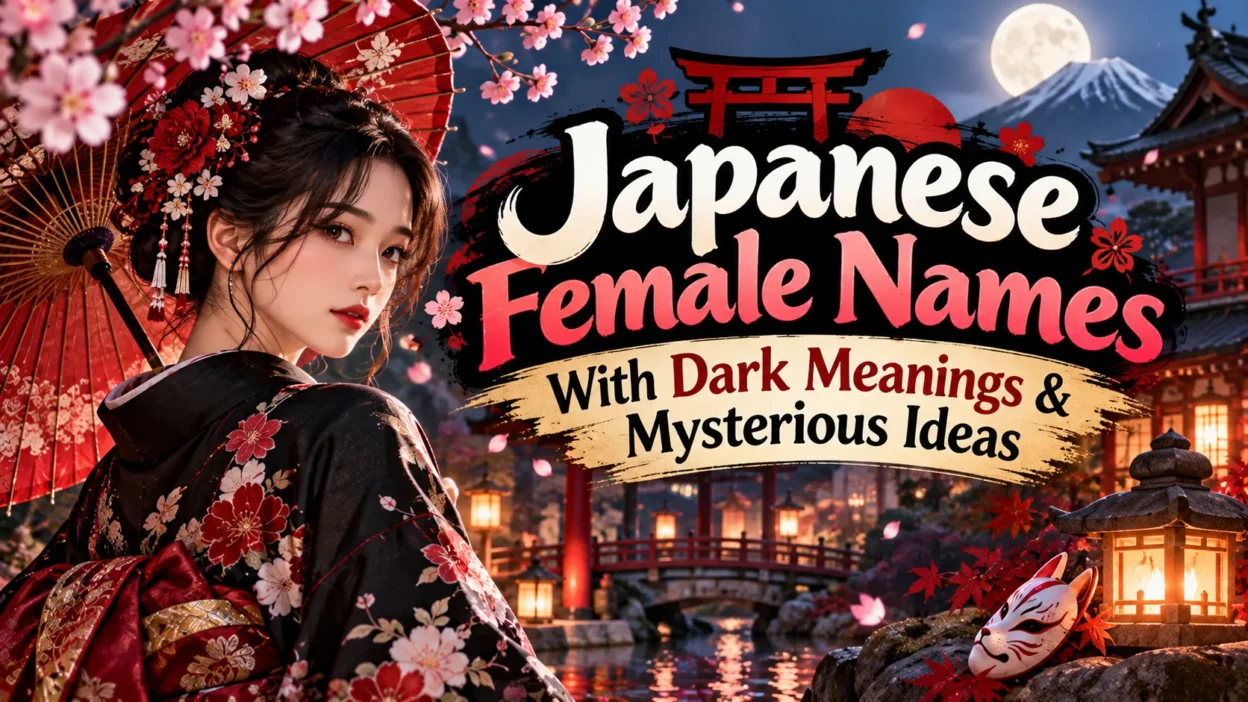
Japanese female names with dark meanings offer a fascinating mix of mystery, elegance, mythology, and symbolism. From names inspired by the moon and shadows to words associated with ghosts, darkness, and the supernatural, Japanese language and culture provide plenty of inspiration for memorable character names. These ideas can help you name a fictional heroine, gothic character, anime-inspired persona, fantasy villain, or mysterious username.
Some Japanese names have gentle meanings but create a dark atmosphere through their literary associations. Others come from Japanese words that directly describe darkness, spirits, or the night. Understanding this distinction helps you choose a name that fits your character without confusing ordinary Japanese vocabulary with traditional feminine names.
Japanese names also depend heavily on kanji, the characters used to write them. The same pronunciation can have several meanings depending on the spelling. This guide explores dark Japanese girl names, names meaning shadow, moon-inspired names, supernatural words, and beautiful names with mysterious associations.
🌑 Japanese Female Names That Mean Darkness
Japanese words connected to darkness can inspire striking names for gothic characters, supernatural stories, and mysterious fictional personalities. Some choices below have direct dark meanings, while others are creative naming ideas rather than conventional Japanese given names.
- Yami (闇) — Darkness; a direct and dramatic choice for a fictional character.
- Kurai (暗い) — Dark or gloomy; primarily an adjective.
- Ankoku (暗黒) — Deep darkness; suitable for a fantasy alias.
- Kage (影) — Shadow; a short, mysterious word.
- Kurayami (暗闇) — Pitch darkness; a descriptive word with a gothic atmosphere.
- Kuro (黒) — Black; a simple color word.
- Kokuyō (黒曜) — Black obsidian; evokes a dark, polished stone.
- Yamikage (闇影) — A creative compound suggesting a shadow in darkness.
- Kurotsuki (黒月) — Black moon; a stylized fantasy name.
- Kurohana (黒花) — Black flower; a poetic compound for a fictional character.
- Anya — A name used in several cultures; it does not inherently mean darkness in Japanese.
- Rei (零) — Zero; can suggest emptiness or mystery in a fictional context.
- Oboro (朧) — Hazy or indistinct; creates a dreamy, shadowy impression.
- Kiri (霧) — Fog or mist; useful for an elusive character.
- Yoru (夜) — Night; a short word with a mysterious feeling.
For a believable Japanese female character, consider established personal names such as Rei or Rin, then choose kanji that support the intended meaning. Words like Ankoku and Kurayami work better as fantasy concepts or aliases than as ordinary given names.
🌙 Japanese Girl Names Inspired by the Moon and Night
The moon and night appear frequently in Japanese poetry, literature, and popular storytelling. Moon-inspired names can convey mystery, solitude, beauty, or a quiet sense of melancholy without directly meaning something frightening.
- Tsukiko (月子) — Moon child with these kanji.
- Mizuki (美月) — Can mean beautiful moon with this spelling.
- Yuzuki (優月) — Can evoke gentleness and the moon, depending on interpretation.
- Runa — Sometimes associated with the moon through selected spellings, but the meaning is not inherent to the pronunciation.
- Yoru (夜) — Night; primarily a vocabulary word.
- Tsukiyo (月夜) — Moonlit night; a poetic expression.
- Mikazuki (三日月) — Crescent moon; a descriptive word rather than a common given name.
- Getsuka (月華) — Moonlight or moon blossom; a poetic compound.
- Yozora (夜空) — Night sky; suitable for a fictional name.
- Kaguya (輝夜) — Associated with the legendary Princess Kaguya.
- Sayo (小夜) — Can evoke a small or quiet night with these characters.
- Shizuku (雫) — Water droplet; can symbolize tears in a melancholic story.
- Hoshiko (星子) — Star child with these kanji.
- Akari (明かり) — Light or illumination; a meaningful contrast to darkness.
- Tsukina — A creative name inspired by the moon; the meaning depends on the chosen characters.
Moon-related names are ideal for characters who appear gentle but hide secrets. For example, Tsukiko could suit a mysterious girl who appears during moonlit scenes, while Yozora could work as a fantasy character’s alias.
🕯️ Japanese Female Names With Gothic and Mysterious Meanings
Gothic Japanese names often draw inspiration from fog, silence, shadows, and unsettling beauty. Rather than relying on literal words for evil, you can choose names that create an atmosphere of secrecy and suspense.
- Rei (怜) — Clever or perceptive with this kanji.
- Rei (零) — Zero; a different spelling with a more abstract association.
- Rin (凛) — Dignified or imposing in feeling.
- Shizuka (静) — Quiet or calm.
- Kasumi (霞) — Mist or haze.
- Hotaru (蛍) — Firefly; evokes a small light in darkness.
- Shion (紫苑) — Associated with the aster flower.
- Setsuna (刹那) — An instant or fleeting moment.
- Kiri (霧) — Fog.
- Oboro (朧) — Hazy or indistinct.
- Sayo (小夜) — A poetic night-related spelling.
- Miyako (都 or other spellings) — Can mean capital or city with certain kanji; it does not inherently mean darkness.
- Ruka — A personal name with meanings that vary by kanji.
- Nagi (凪) — Calm or a lull in the wind and waves.
- Shizuku (雫) — Droplet; can suggest tears or delicate sadness.
- Hotaru (蛍) — Firefly; especially fitting for a character surrounded by darkness.
- Kaoru (薫 or other spellings) — Can relate to fragrance; the meaning depends on the characters.
- Ayame (菖蒲) — Iris flower with this spelling.
- Mafuyu (真冬) — Midwinter with these kanji.
- Fuyuka (冬花 or other spellings) — Can evoke a winter flower when written with these characters.
Names such as Rei, Rin, Kasumi, Shion, and Hotaru are useful starting points when you want a feminine name that feels mysterious without giving the character an explicitly negative name.
💀 Japanese Words Associated With Death and the Supernatural
Japanese folklore includes spirits, curses, haunted places, and supernatural beings. These concepts can inspire dark fictional names, particularly for horror stories, manga, fantasy novels, and anime-inspired characters.
However, several options in this section are vocabulary words rather than conventional Japanese female names. Their purpose is creative inspiration, not a claim that Japanese families commonly use them as given names.
- Yūrei (幽霊) — Ghost or spirit.
- Shinigami (死神) — Death god or death spirit.
- Onryō (怨霊) — Vengeful spirit.
- Reikon (霊魂) — Spirit or soul.
- Noroi (呪い) — Curse.
- Meikai (冥界) — Underworld.
- Makai (魔界) — Demon realm or supernatural world.
- Shi (死) — Death.
- Ankoku (暗黒) — Deep darkness.
- Yami (闇) — Darkness.
- Mononoke (物の怪) — Supernatural apparition or mysterious spirit.
- Bakemono (化け物) — Monster or transformed supernatural being.
- Ayakashi (妖) — A term associated with mysterious or supernatural beings, with usage depending on context.
- Kaidan (怪談) — Ghost story or supernatural tale.
- Mugen (夢幻) — Dreamlike illusion or fantasy.
- Tamashii (魂) — Soul or spirit.
- Kokuei (黒影) — A creative compound suggesting a black shadow.
- Yūma (various spellings) — A personal name whose meaning depends on its kanji; it does not automatically mean ghost.
- Reika (麗華 or other spellings) — Can suggest beauty or elegance with certain kanji; not inherently a death-related name.
- Kuroe (various spellings) — A name-like sound whose meaning depends on the actual characters used.
For a horror villain, Onryō or Shinigami may communicate the supernatural theme immediately. For a realistic Japanese character, a conventional name such as Rei or Shion is usually more natural, with the dark atmosphere supplied by the story.
🖤 Japanese Names Inspired by Black Flowers and Dark Nature
Flowers, forests, mist, and winter landscapes can create a dark aesthetic without using words that literally mean death. Japanese nature-inspired names often feel poetic and elegant, making them useful for fantasy characters and gothic storytelling.
- Ayame (菖蒲) — Iris flower.
- Shion (紫苑) — Aster flower.
- Hotaru (蛍) — Firefly.
- Kasumi (霞) — Mist or haze.
- Kiri (霧) — Fog.
- Fuyuka (冬花) — Winter flower with these kanji.
- Mafuyu (真冬) — Midwinter.
- Yuki (雪 or other spellings) — Snow with this kanji.
- Koyuki (小雪) — Light snow or little snow, depending on context.
- Kuroyuri (黒百合) — Black lily; a flower name or descriptive compound rather than a common conventional female name.
- Kurohana (黒花) — Black flower; a creative compound.
- Kokutan (黒檀) — Ebony.
- Kokuyō (黒曜) — Black obsidian.
- Tsukiko (月子) — Moon child.
- Shizuku (雫) — Water droplet.
- Nagi (凪) — Calm or a lull in wind and waves.
- Yozora (夜空) — Night sky.
- Suiren (睡蓮) — Water lily.
- Rikka (六花) — An expression associated with snow crystals in literary usage.
- Hina (various spellings) — A familiar feminine name whose meaning depends on the chosen characters.
These names are particularly useful when you want a character to feel cold, distant, elegant, or quietly dangerous. Mafuyu, Koyuki, Kasumi, and Shion can create that impression without directly naming the character after darkness.
🥀 Japanese Female Names With Sad or Melancholy Associations
Melancholy names suit characters who have experienced loss, loneliness, betrayal, or personal transformation. Some Japanese words directly express sadness, while other names create a wistful mood through their imagery or literary associations.
- Setsuna (刹那) — A fleeting moment.
- Shizuku (雫) — Droplet; can symbolize tears in a story.
- Kasumi (霞) — Mist or haze.
- Shion (紫苑) — Aster flower.
- Hotaru (蛍) — Firefly; its light can symbolize fleeting beauty.
- Mafuyu (真冬) — Midwinter.
- Koyuki (小雪) — Light snow or little snow.
- Sayo (小夜) — A poetic night-related spelling.
- Yūutsu (憂鬱) — Melancholy; a vocabulary word, not a conventional name.
- Kanashimi (悲しみ) — Sadness; a descriptive noun rather than a typical given name.
- Mayoi (迷い) — Uncertainty, wandering, or being lost.
- Oboro (朧) — Hazy or indistinct.
- Yoru (夜) — Night.
- Nagi (凪) — Calm or a lull in wind and waves.
- Rei (零) — Zero; can evoke emptiness in a fictional setting.
- Yuki (雪) — Snow; can create a cold, quiet atmosphere.
- Fuyumi (冬美 or other spellings) — Can combine winter and beauty with selected kanji.
- Aika (various spellings) — Often has positive meanings depending on the characters.
- Rin (凛) — Dignified or severe in feeling.
- Shizuka (静) — Quiet or calm.
For subtle sadness, names connected with winter, snow, mist, and fleeting moments often work better than direct words for sorrow. They allow the character’s personality and backstory to create the emotional meaning.
🦇 Japanese Female Names for Dark Fantasy Characters
Dark fantasy characters often need names that sound memorable and mysterious while still fitting the story’s world. The following selection mixes recognizable Japanese given names with poetic words that work better as titles, aliases, or supernatural identities.
- Rei — Short, cool, and mysterious.
- Rin — Strong and concise.
- Shion — Floral and slightly wistful.
- Kasumi — Soft and fog-like.
- Hotaru — Delicate, with firefly imagery.
- Mafuyu — Winter-inspired and elegant.
- Tsukiko — Moon child.
- Mizuki — Can evoke a beautiful moon.
- Shizuka — Quiet or calm.
- Setsuna — Fleeting moment.
- Kaguya — Literary and legendary associations.
- Kiri — Fog; more word-like than conventional.
- Yoru — Night; better suited to a fantasy alias.
- Kage — Shadow; a creative alias.
- Yami — Darkness; a creative alias.
- Oboro — Hazy or indistinct.
- Yozora — Night sky; poetic and fantasy-friendly.
- Getsuka — Moon blossom or moonlight, depending on interpretation.
- Kurohana — Black flower; a creative compound.
- Kurotsuki — Black moon; a creative compound.
A good dark fantasy name doesn’t need to mean something frightening. A soft-sounding name paired with a mysterious personality can create a more memorable character than a name that directly translates to “death” or “darkness.”
🧛 Japanese Female Names for Villains and Antagonists
A villain’s name should reflect the character’s role, personality, and atmosphere. For a Japanese-inspired story, you can use an established personal name for realism and reserve supernatural vocabulary for the character’s title or alias.
- Rei (零) — Zero; can suggest emptiness.
- Rin (凛) — Dignified or imposing in feeling.
- Shion (紫苑) — Aster flower.
- Mafuyu (真冬) — Midwinter.
- Kasumi (霞) — Mist.
- Shizuka (静) — Quiet or calm.
- Setsuna (刹那) — Fleeting moment.
- Kaguya (輝夜) — Literary association with Princess Kaguya.
- Yami (闇) — Darkness; a fantasy alias.
- Kage (影) — Shadow; a fantasy alias.
- Onryō (怨霊) — Vengeful spirit; a supernatural title.
- Yūrei (幽霊) — Ghost; a supernatural concept.
- Shinigami (死神) — Death spirit; a supernatural title.
- Noroi (呪い) — Curse; an ominous alias.
- Makai (魔界) — Demon realm; better as a title or concept.
- Oboro (朧) — Hazy or indistinct.
- Kuro (黒) — Black; a color word.
- Kuroyuri (黒百合) — Black lily; a poetic compound.
- Yozora (夜空) — Night sky.
- Mugen (夢幻) — Dreamlike illusion.
For a realistic antagonist, a recognizable name such as Rei, Rin, or Shion may sound more natural. You can then add a title like “The Shadow,” “The Black Moon,” or “The Vengeful Spirit” to create a dark identity.
🌸 Beautiful Japanese Girl Names With Hidden Meanings
Some names feel mysterious because their meanings depend on the kanji, not because they literally refer to darkness. These names can be ideal when you want beauty and subtle symbolism rather than an obviously gothic name.
- Rei (怜) — Clever or perceptive.
- Rei (零) — Zero.
- Mizuki (美月) — Beautiful moon.
- Tsukiko (月子) — Moon child.
- Shion (紫苑) — Aster flower.
- Kasumi (霞) — Mist or haze.
- Hotaru (蛍) — Firefly.
- Rin (凛) — Dignified or imposing in feeling.
- Shizuka (静) — Quiet or calm.
- Setsuna (刹那) — Fleeting moment.
- Mafuyu (真冬) — Midwinter.
- Koyuki (小雪) — Light snow or little snow.
- Yuki (雪) — Snow.
- Ayame (菖蒲) — Iris flower.
- Shizuku (雫) — Water droplet.
- Nagi (凪) — Calm or a lull in the wind.
- Sayo (小夜) — A poetic night-related spelling.
- Fuyumi (冬美) — Winter beauty with these kanji.
- Yuzuki (優月) — A gentle or graceful moon interpretation.
- Hoshiko (星子) — Star child.
The important point is that a name’s meaning comes from its spelling. If you select a name for a real person, verify the intended kanji and natural usage rather than relying on an English-language list alone.
📝 How to Choose the Right Dark Japanese Name
The best name depends on whether you want a realistic Japanese feminine name, a fantasy alias, or a word that directly expresses a dark concept. These categories serve different purposes, so choosing carefully can make your character feel more believable.
Use these guidelines when selecting a name:
- For a realistic character: Consider Rei, Rin, Shion, Kasumi, Hotaru, or Shizuka, and verify the chosen kanji.
- For a supernatural character: Explore concepts such as Yūrei or Onryō as titles or story references.
- For a gothic username: Short words such as Yami, Kage, and Yoru can create an immediate dark aesthetic.
- For a moon-themed character: Consider Tsukiko or Mizuki with suitable kanji.
- For a melancholic character: Look at Setsuna, Kasumi, Shizuku, or winter-inspired names.
- For a fantasy villain: Pair a conventional personal name with a dark title or alias.
- For a name with a literal meaning: Confirm the exact kanji, pronunciation, and cultural context before using it.
Avoid assuming that every Japanese word makes a natural personal name. Some words have strong negative associations and would sound unusual or inappropriate as a real person’s given name.
❓ Frequently Asked Questions About Japanese Female Names With Dark Meanings
What Japanese girl name means darkness?
Yami (闇) means darkness, but it is primarily a Japanese word rather than a conventional feminine given name. It works better as a fictional name, nickname, or alias.
What Japanese female name means death?
Shi (死) means death, and Shinigami (死神) means death god or death spirit. These are vocabulary terms, not ordinary Japanese female given names. For a fictional character, they may work as titles or supernatural concepts.
What Japanese name means shadow?
Kage (影) means shadow. It can serve as a creative alias or character concept, although it is not a common traditional female given name.
What Japanese girl name means moon?
Tsukiko (月子) can mean moon child, while Mizuki (美月) can evoke a beautiful moon with those characters. Both are more recognizable personal-name options than literal words such as Yoru or Ankoku.
What Japanese name means ghost?
Yūrei (幽霊) means ghost or spirit. It is a supernatural term rather than a conventional girl’s name, so it is best suited to fictional characters or aliases.
What Japanese female name means sadness?
Kanashimi (悲しみ) means sadness, and Yūutsu (憂鬱) means melancholy. Both are ordinary vocabulary words rather than conventional feminine names. Names associated with mist, winter, or fleeting moments can convey a sad mood more subtly.
What Japanese name means black flower?
Kurohana (黒花) can be constructed to mean black flower, but it is a poetic compound rather than a widely established traditional female name. Kuroyuri (黒百合) means black lily and offers another dark floral concept.
Are dark Japanese names suitable for real babies?
Some mysterious names are also recognizable personal names, but words meaning death, curse, or darkness may sound unusual or carry negative associations. For a real child, verify the name with a reliable Japanese naming source or fluent speaker.
What are the best Japanese female names for a dark anime character?
For a natural personal name, consider Rei, Rin, Shion, Kasumi, Hotaru, or Mafuyu. For a supernatural alias, words such as Yami or Kage may suit the character, depending on the story.
Do Japanese names have more than one meaning?
Yes. Japanese names can use different kanji to represent the same pronunciation, and each spelling can have a different meaning. Always check the specific characters before assigning a meaning to a name.
✅ Conclusion
Japanese female names with dark meanings can draw inspiration from darkness, shadows, the moon, winter, melancholy, and supernatural folklore. Some options, such as Yami, Kage, Yoru, and Yūrei, are Japanese words with clear dark associations, while Rei, Rin, Shion, Kasumi, and Hotaru offer more natural personal-name possibilities with mysterious or poetic qualities.
The best choice depends on your purpose. If you’re creating a fantasy villain or supernatural character, a direct dark word may fit. If you want a believable Japanese female character, choose a recognized name and verify its kanji and meaning.
Above all, remember that Japanese spelling matters. A name’s sound alone does not establish its meaning, and creative compounds should not be mistaken for traditional given names.

Lillian Hayes is a content writer focused on explaining meanings and language in a simple and clear way. She creates easy-to-understand content that helps readers learn and communicate better.