
Have you ever heard someone wish another person a life filled with prosperity? The word often appears in inspirational messages, business discussions, religious blessings, and conversations about success. But what does prosperity actually mean?
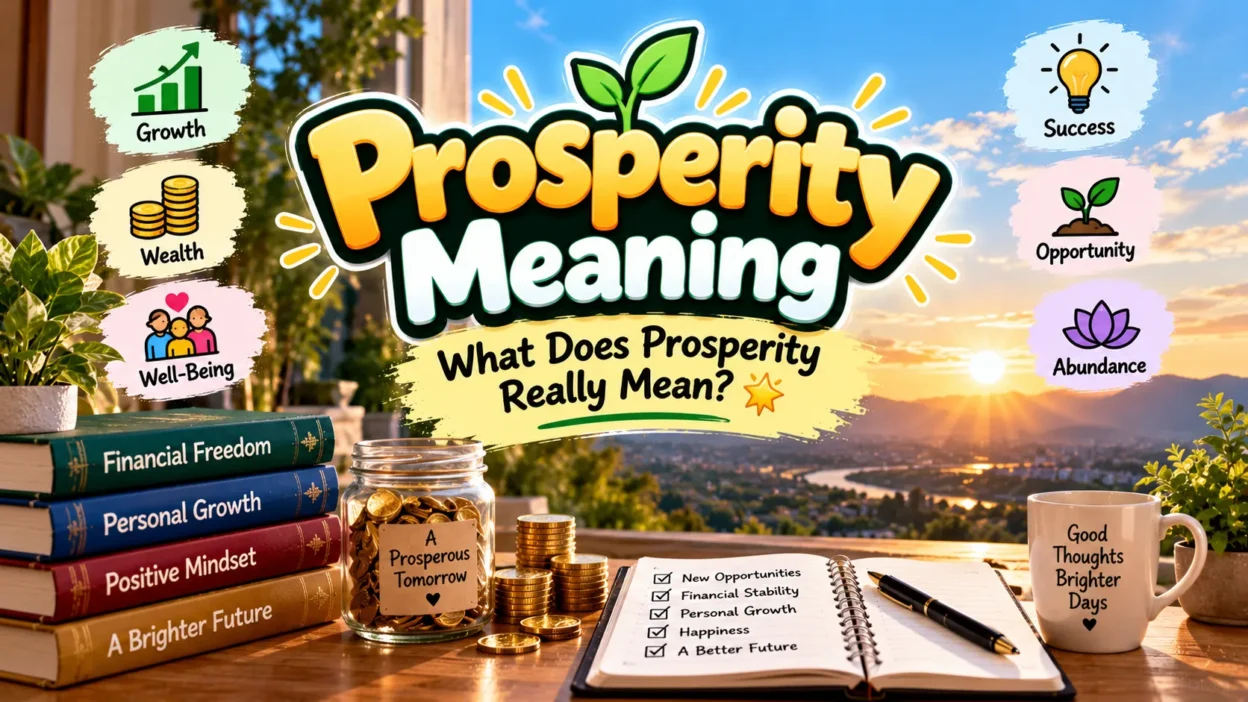
The prosperity meaning goes beyond simply having money. Prosperity describes a state of success, well-being, growth, and financial security. It can refer to a person who enjoys a comfortable life, a business that continues to grow, or a community where people have opportunities to thrive.
Depending on the context, prosperity may include wealth, good health, happiness, stability, and a sense of fulfillment. Understanding this word can help you use it naturally in everyday English, professional writing, and meaningful messages.
📖 What Does Prosperity Mean?
Prosperity means the state of being successful, financially comfortable, or generally doing well in life. People often associate it with wealth and economic growth, but the word can also describe broader forms of well-being.
For example, a family may experience prosperity when it has stable finances, access to education, good health, and opportunities for the future. A business may achieve prosperity through steady growth, satisfied customers, and long-term success.
The word usually carries a positive meaning and suggests that someone or something is thriving rather than struggling.
| Context | Meaning of prosperity |
|---|---|
| Personal life | Success, stability, and well-being |
| Money | Financial comfort and wealth |
| Business | Growth, profitability, and success |
| Society | Economic opportunity and improved living conditions |
| Spiritual life | A sense of fulfillment, peace, or blessing |
In simple words, prosperity means doing well and having the resources or opportunities to thrive.
💡 Prosperity Meaning in Simple Words
In simple English, prosperity means success, wealth, and a good quality of life.
Imagine someone who earns a steady income, supports their family, enjoys meaningful relationships, and has opportunities to pursue their goals. You might describe that person as living a prosperous life.
Prosperity does not necessarily mean being extremely rich. A person can experience prosperity through financial stability, personal achievements, good health, and a sense of security.
Here are a few examples:
- The family enjoyed years of prosperity.
- Hard work helped the business achieve prosperity.
- Education can create opportunities for prosperity.
- The community hopes for peace and prosperity.
- She worked toward a future filled with prosperity and happiness.
These examples show that prosperity can apply to money, work, society, and personal well-being.
💰 What Does Prosperity Mean Financially?
In financial contexts, prosperity refers to having sufficient resources to meet needs, maintain a comfortable lifestyle, and pursue future goals.
It may include steady earnings, savings, manageable debt, access to opportunities, and the ability to handle unexpected expenses.
For example, a business owner who consistently earns a profit and builds financial reserves may experience financial prosperity.
However, prosperity does not always mean extreme wealth. A household with reliable income, reasonable expenses, and financial security may be prosperous even if it does not own expensive cars or luxury properties.
Financial prosperity can involve:
- Stable income
- Savings for emergencies
- Manageable debt
- Career opportunities
- Business growth
- Long-term financial planning
- The ability to meet essential needs
The main idea is not simply having more money. It is having enough resources and stability to live well and plan for the future.
🌱 What Does Prosperity Mean in Life?
Prosperity in life can refer to a broad sense of well-being rather than financial success alone.
Someone may feel prosperous because they have supportive relationships, meaningful work, good health, personal freedom, and opportunities to learn and grow.
For example, a person who earns a modest income but enjoys a stable home, supportive family, and fulfilling career may consider their life prosperous.
| Area of life | Example of prosperity |
|---|---|
| Relationships | Strong, supportive connections |
| Health | Access to care and healthy habits |
| Career | Meaningful work and opportunities |
| Education | Opportunities to learn and develop |
| Personal growth | Confidence and a sense of purpose |
| Finances | Stability and the ability to meet needs |
This broader meaning explains why prosperity is not always measured by income or possessions.
🏢 What Does Prosperity Mean in Business?
In business, prosperity describes a period of success, growth, and financial health.
A prosperous business may attract customers, generate sustainable profits, retain employees, and develop products or services that meet people’s needs.
For example:
The company achieved prosperity by improving its services and building customer trust.
This sentence suggests that the business became successful and developed a stronger position.
Business prosperity may involve:
- Consistent revenue
- Sustainable profits
- Customer satisfaction
- Strong relationships with employees
- Effective leadership
- Innovation
- Long-term planning
A business can experience short-term profits without achieving lasting prosperity. Long-term success usually depends on stability, adaptability, and responsible decisions.
🕊️ Prosperity Meaning in the Bible and Spirituality
In religious and spiritual contexts, prosperity can refer to blessings, well-being, abundance, peace, or a life that flourishes.
In some Christian interpretations, prosperity includes spiritual growth, faith, generosity, and a meaningful relationship with God. Other interpretations emphasize material provision or success.
The exact meaning depends on the religious tradition and the passage being discussed.
Prosperity in a spiritual context does not always mean becoming wealthy. Many people understand it as a combination of inner peace, supportive relationships, purpose, and the ability to care for others.
For example, a blessing for peace and prosperity expresses a wish that someone experiences well-being, security, and positive opportunities.
🌍 What Does Prosperity Mean for a Country?
When people discuss national prosperity, they usually refer to a country’s economic strength and the well-being of its population.
A prosperous country may have productive industries, employment opportunities, effective public services, reliable infrastructure, and access to education and healthcare.
However, a country’s economic growth does not automatically mean every resident benefits equally.
| Factor | Connection to prosperity |
|---|---|
| Employment | Provides income and economic opportunity |
| Education | Develops knowledge and skills |
| Healthcare | Supports health and quality of life |
| Infrastructure | Helps people and businesses function |
| Economic stability | Makes planning easier |
| Opportunity | Allows people to improve their circumstances |
This broader perspective shows that national prosperity involves both economic performance and people’s ability to benefit from it.
⚖️ Prosperity vs. Wealth: What’s the Difference?
Prosperity and wealth are closely related, but they are not identical.
Wealth usually refers to the money, assets, and resources a person or organization owns. Prosperity describes a broader state of success, comfort, growth, and well-being.
A wealthy person may own valuable property but experience poor health or personal difficulties. Another person may have moderate financial resources but enjoy strong relationships, stable living conditions, and a fulfilling life.
| Prosperity | Wealth |
|---|---|
| Broad sense of success and well-being | Financial resources and valuable assets |
| Can include health and relationships | Primarily concerns money and possessions |
| Applies to people, businesses, and societies | Applies to individuals, organizations, and countries |
| Example: A life of prosperity | Example: A person with substantial wealth |
Wealth can contribute to prosperity, but the two words do not mean exactly the same thing.
🆚 Prosperity vs. Success
Success means achieving a desired goal or result. Prosperity often suggests an ongoing state of thriving or well-being.
For example, winning a competition is a success. Building a stable career, maintaining financial security, and enjoying a fulfilling life may represent prosperity.
| Success | Prosperity |
|---|---|
| Achieving a goal | Enjoying a broader state of well-being |
| Can be a single accomplishment | Often suggests lasting progress |
| Example: Passing an important exam | Example: Building a stable, fulfilling life |
| May be personal or professional | Often includes several areas of life |
The words overlap, but prosperity usually has a broader and more lasting meaning.
🔤 What Are Synonyms for Prosperity?
The best synonym depends on the sentence. Some words emphasize money, while others focus on success, growth, or general well-being.
| Synonym | Meaning |
|---|---|
| Wealth | Having valuable financial resources |
| Success | Achieving desired results |
| Abundance | Having plenty of something |
| Affluence | Having substantial wealth |
| Well-being | Being healthy, comfortable, or content |
| Flourishing | Growing or thriving successfully |
| Good fortune | Experiencing favorable circumstances |
| Growth | Increasing or developing over time |
| Opulence | Great wealth and luxury |
| Thriving | Doing well or becoming successful |
For example, affluence works well when discussing wealth, while flourishing may better describe a community or a person’s overall development.
🔄 What Is the Opposite of Prosperity?
The opposite of prosperity depends on the context. Words such as poverty, hardship, decline, and adversity describe different forms of difficulty or lack of success.
| Opposite | Meaning |
|---|---|
| Poverty | Lack of sufficient financial resources |
| Hardship | A difficult or challenging condition |
| Adversity | Difficult circumstances |
| Decline | A reduction in strength, quality, or success |
| Failure | Lack of success in achieving a goal |
| Destitution | Extreme poverty or lack of basic resources |
For example, poverty is the clearest opposite when prosperity refers specifically to financial comfort. Decline may be more appropriate when discussing a business or economy that is losing strength.
✍️ How to Use Prosperity in a Sentence
Prosperity is a noun. It commonly appears in phrases such as financial prosperity, economic prosperity, peace and prosperity, and a period of prosperity.
Here are 15 natural examples:
- The family worked hard to build a future of prosperity.
- Education can open doors to greater prosperity.
- The country experienced a period of economic prosperity.
- The business achieved prosperity through careful planning.
- They wished their neighbors peace and prosperity.
- Financial stability helped the family enjoy greater prosperity.
- The town grew in prosperity as new businesses opened.
- She believes that health is an important part of prosperity.
- The organization hopes to create opportunities for shared prosperity.
- Hard work alone does not guarantee prosperity.
- The region struggled to restore its former prosperity.
- The new investment created opportunities for local prosperity.
- They celebrated the company’s growing prosperity.
- Many people associate prosperity with financial freedom.
- The community hopes future generations will enjoy peace and prosperity.
These examples demonstrate how the word fits into everyday English, professional writing, and discussions about society.
📝 What Is the Adjective Form of Prosperity?
The main adjective related to prosperity is prosperous.
Prosperous describes a person, business, community, or period that is successful, financially comfortable, or thriving.
For example:
- They live in a prosperous neighborhood.
- The company became prosperous over time.
- It was a prosperous period for local businesses.
- She hopes to build a prosperous future.
The word prosperously is the adverb form, although it is less common in everyday conversation.
| Word | Part of speech | Example |
|---|---|---|
| Prosperity | Noun | The region enjoyed prosperity. |
| Prosperous | Adjective | It was a prosperous region. |
| Prosperously | Adverb | The business operated prosperously. |
| Prosper | Verb | The community continued to prosper. |
Remembering this word family can help you use prosperity naturally in different sentence structures.
💡 How to Achieve Prosperity
People define prosperity differently, so there is no single path that guarantees it. Still, certain habits and opportunities can support a more stable and fulfilling life.
Financial planning, education, healthy relationships, skill development, and consistent effort can all contribute to well-being.
Consider these practical steps:
- Set realistic personal and financial goals.
- Develop skills that create new opportunities.
- Build savings when your circumstances allow.
- Maintain supportive relationships.
- Take care of your physical and mental well-being.
- Review your progress and adjust your plans.
- Look for ways to contribute to your community.
Prosperity is not always about accumulating more possessions. It can also mean building a life that provides stability, purpose, and room to grow.
❓ Frequently Asked Questions About Prosperity Meaning
What does prosperity mean in simple words?
Prosperity means success, financial comfort, and overall well-being. It describes a person, business, or community that is thriving.
Does prosperity mean wealth?
Not exactly. Wealth refers mainly to money and assets, while prosperity can include financial stability, health, relationships, opportunity, and personal fulfillment.
What is an example of prosperity?
A family with stable finances, a comfortable home, supportive relationships, and opportunities for the future may be described as prosperous.
What does peace and prosperity mean?
Peace and prosperity means living in conditions of safety, stability, well-being, and opportunity. The phrase is often used in greetings, blessings, and wishes for the future.
What does prosperity mean in the Bible?
In Christian interpretations, prosperity can refer to blessings, well-being, spiritual growth, provision, or flourishing. Its meaning depends on the biblical passage and theological perspective.
What is the difference between prosperity and success?
Success usually means achieving a particular goal, while prosperity often describes a broader state of continued well-being and growth.
What is the opposite of prosperity?
Common opposites include poverty, hardship, decline, and adversity. The most appropriate word depends on whether prosperity refers to money, personal life, or economic conditions.
What is another word for prosperity?
Synonyms include wealth, affluence, abundance, flourishing, success, and well-being. Each word has a slightly different emphasis.
What is the adjective form of prosperity?
The adjective form is prosperous. For example, a prosperous business is one that is successful or thriving.
Can prosperity mean happiness?
Prosperity can include happiness and well-being, but the words are not identical. Prosperity often includes material security, opportunity, and success as well as personal satisfaction.
🌟 Final Thoughts on Prosperity Meaning
The prosperity meaning goes beyond money. It describes a state of success, growth, stability, and well-being that can apply to individuals, families, businesses, and entire communities.
Financial security is an important part of prosperity for many people, but health, relationships, education, opportunity, and personal fulfillment can matter just as much. A prosperous life does not have to look the same for everyone.
The simplest way to remember the word is this: prosperity means thriving and doing well in life, whether through financial success, personal well-being, or broader opportunities.

Lillian Hayes is a content writer focused on explaining meanings and language in a simple and clear way. She creates easy-to-understand content that helps readers learn and communicate better.